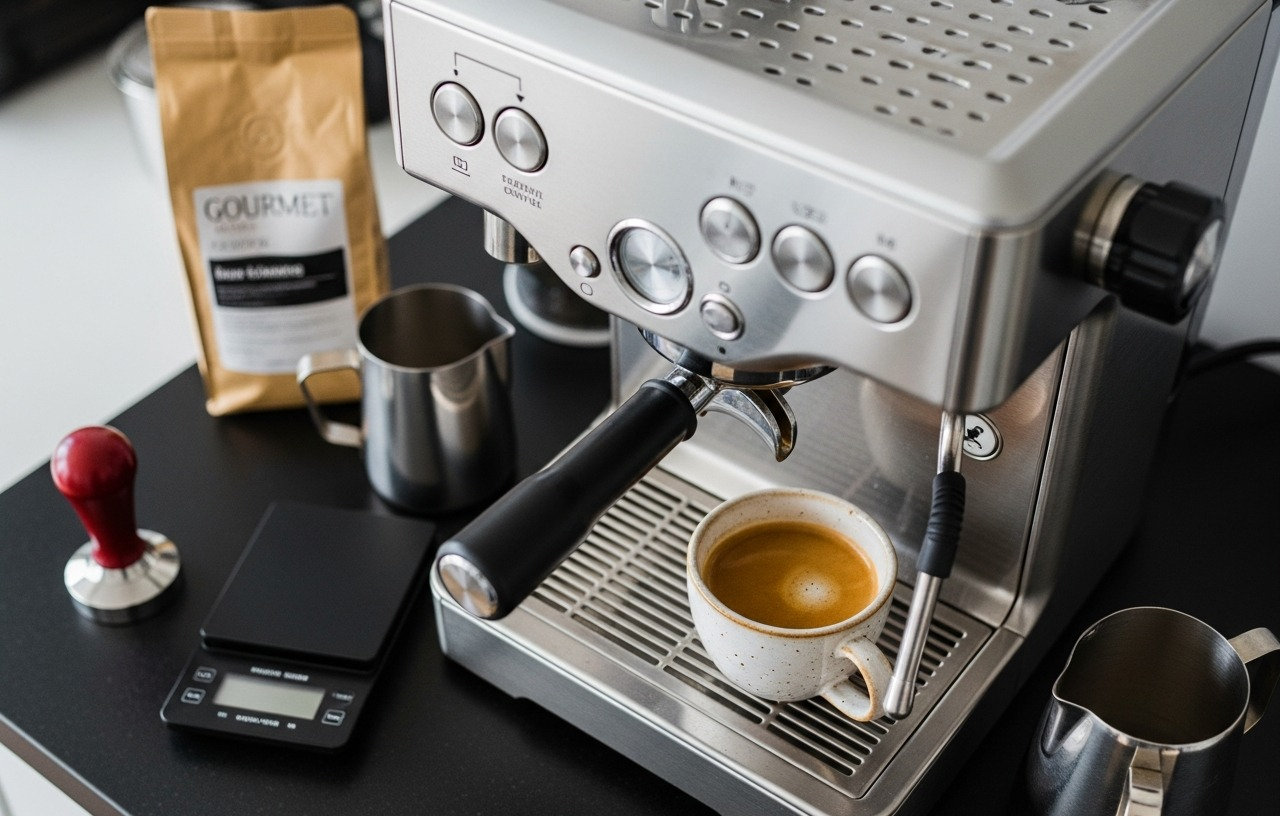
Understanding What is Espresso Crema
Espresso crema is the reddish-brown foam that crowns a freshly pulled shot of espresso, formed by the emulsification of coffee oils and the suspension of carbon dioxide gas. This visible layer, typically 2-4 millimeters thick, is a hallmark of a properly extracted espresso. It offers immediate visual feedback on the freshness of the coffee beans and the quality of the brewing process.
The presence and quality of crema are often considered a primary indicator for baristas to assess an espresso shot. While its taste contribution is debated among enthusiasts, its role as a diagnostic tool is widely accepted. A well-formed crema suggests that the coffee beans were fresh, the grind size was appropriate, and the brewing parameters, such as temperature and pressure, were within optimal ranges.
The Science Behind Espresso Crema Formation
The formation of crema, or what makes crema on espresso, is a complex interaction of physics and chemistry. Coffee beans naturally contain oils and, more importantly, carbon dioxide gas. This gas is a byproduct of the roasting process, trapped within the bean's cellular structure. When hot water, typically around 195-205°F (90-96°C), is forced through finely ground coffee at high pressure (around 9 bars), several things happen simultaneously.
First, the high pressure dissolves the carbon dioxide gas into the hot water, super-saturating it. As the espresso exits the high-pressure environment of the portafilter and enters the lower-pressure atmosphere of the cup, the dissolved CO2 gas rapidly comes out of solution. This rapid depressurization causes the gas to form tiny bubbles. Simultaneously, the hot water extracts various coffee solids, including proteins and emulsified oils. These oils and proteins stabilize the CO2 bubbles, preventing them from collapsing quickly. This stabilization creates the dense, persistent foam known as crema. The darker the roast, generally the more oil is present, which can contribute to a more pronounced crema, though not always a better one.
Ideal Crema Characteristics and What They Indicate
A perfect espresso shot displays specific crema characteristics. What is the crema in espresso supposed to look like? It should be a uniform, reddish-brown color, often described as hazelnut or tiger-striped. These stripes, darker brown streaks within the lighter body of the crema, are a strong indicator of a well-extracted shot. The crema should be thick, typically between 2 to 4 millimeters, and persistent, meaning it should last for at least 90 seconds to two minutes before slowly dissipating.
The texture of ideal crema is fine and dense, without large, visible bubbles. If you stir the espresso, the crema should reform, at least partially, over the surface. These visual cues collectively suggest that the coffee beans were fresh, the grind was optimally fine, the dose was correct, the tamp was even, and the brewing temperature and pressure were consistent. A shot with good crema often tastes balanced, with a pleasant body and aroma.
What Crema Tells You About Your Extraction
The appearance of your crema offers critical feedback on your espresso extraction. You can troubleshoot common issues by interpreting these visual signs.
- Thin, Pale Crema: A very light, thin, or quickly disappearing crema often suggests under-extraction. This could be due to coffee beans that are too old and have lost their CO2, a grind that is too coarse, insufficient coffee dose, too low brew temperature, or inadequate tamping. Under-extracted shots often taste sour, weak, or watery.
- Dark, Patchy Crema: Crema that is very dark brown, sometimes with black spots, or appears bubbly and uneven, can indicate over-extraction. This might result from a grind that is too fine, too high a brew temperature, too much coffee in the portafilter, or excessive tamping pressure. Over-extracted shots typically taste bitter, burnt, or astringent.
- No Crema or Very Little: The complete absence of crema is usually a sign of very stale coffee beans or a severely incorrect brewing parameter. It can also happen with very light roasts, which naturally produce less crema.
- Large Bubbles in Crema: Large, unstable bubbles can point to an uneven tamp or channeling, where water finds an easy path through the coffee puck instead of flowing evenly.
By observing these characteristics, a home barista can make precise adjustments to their grind size, dose, or tamping technique to improve their next shot. Consistency in crema appearance is a strong indicator of a consistent brewing process.
Common Crema Issues and How to Troubleshoot Them
Achieving consistent, beautiful crema requires attention to several variables. When your crema is not ideal, you can adjust specific elements of your espresso preparation.
Stale Beans and Crema
The most common reason for poor crema is stale coffee beans. Roasted coffee beans degas carbon dioxide over time. Freshly roasted beans, typically within 1-3 weeks of the roast date, contain the most CO2, leading to robust crema. Beans older than a month or two will produce significantly less crema, regardless of other factors. Always use fresh, whole beans and grind them just before brewing.
Grind Size and Crema Quality
The grind size has a direct impact on extraction and, consequently, crema. If the grind is too coarse, water flows through too quickly (under-extraction), resulting in thin, pale crema. Conversely, if the grind is too fine, water struggles to pass (over-extraction), leading to dark, uneven, or quickly dissipating crema. Adjust your burr grinder in small increments until you achieve the desired flow rate and crema.
Tamping Pressure and Crema
Proper tamping ensures an even distribution of water through the coffee puck. Uneven or insufficient tamping can lead to channeling, where water bypasses parts of the coffee, causing uneven extraction and patchy crema with large bubbles. Aim for firm, even pressure, typically around 30 pounds, to create a uniform puck. The purpose of a coffee tamper is to create a flat, dense, and level surface for optimal water flow. You can learn more about What is the Purpose of a Coffee Tamper?
Brew Temperature and Pressure
Brew temperature significantly impacts extraction. Too low a temperature can lead to under-extraction and pale crema. Too high a temperature can cause over-extraction and dark, burnt-looking crema. Most home espresso machines operate within a consistent temperature range, but issues can arise. Machines with inconsistent pressure, or those that cannot reach sufficient pressure, will struggle to create proper crema. If your machine is dripping water, it might indicate pressure issues that affect crema. See Espresso Machine Dripping Water? Common Causes and Fixes.
Crema Differences: Traditional Espresso vs. Nespresso
The question of what is crema Nespresso or what is the crema in Nespresso often arises because the crema from capsule machines can look different from traditional espresso. Nespresso machines, and other pod-based systems, produce crema through a similar principle of high-pressure extraction. However, there are key differences that affect the resulting foam.
Nespresso capsules contain pre-ground coffee, which means the coffee's carbon dioxide content begins to diminish from the moment it is ground and sealed. While Nespresso aims for airtight seals, the coffee is not freshly ground for each shot, unlike traditional espresso preparation. This can result in crema that is often lighter in color, less dense, and may dissipate more quickly than crema from freshly ground, high quality espresso beans brewed on a traditional machine.
Additionally, the specific blend of coffee in Nespresso capsules is optimized for their brewing system. While Nespresso crema serves a similar visual purpose, it is generally considered less indicative of complex flavor profiles or precise extraction parameters compared to what is the crema on espresso from a manual or semi-automatic machine.
The Importance of Crema in Espresso
Crema is more than just an aesthetic topping. It acts as a visual barometer for your espresso, providing valuable clues about the quality of your ingredients and your brewing technique. A consistent, well-formed crema suggests a balanced extraction, leading to a flavorful and aromatic shot. While some modern espresso trends, particularly with lighter roasts, may de-emphasize crema, it remains a fundamental characteristic for evaluating classic espresso.
By understanding what is espresso crema, how it forms, and what its appearance signifies, home baristas can refine their skills and consistently pull better shots. It is a key element in the sensory experience of espresso, offering insight before the first sip.