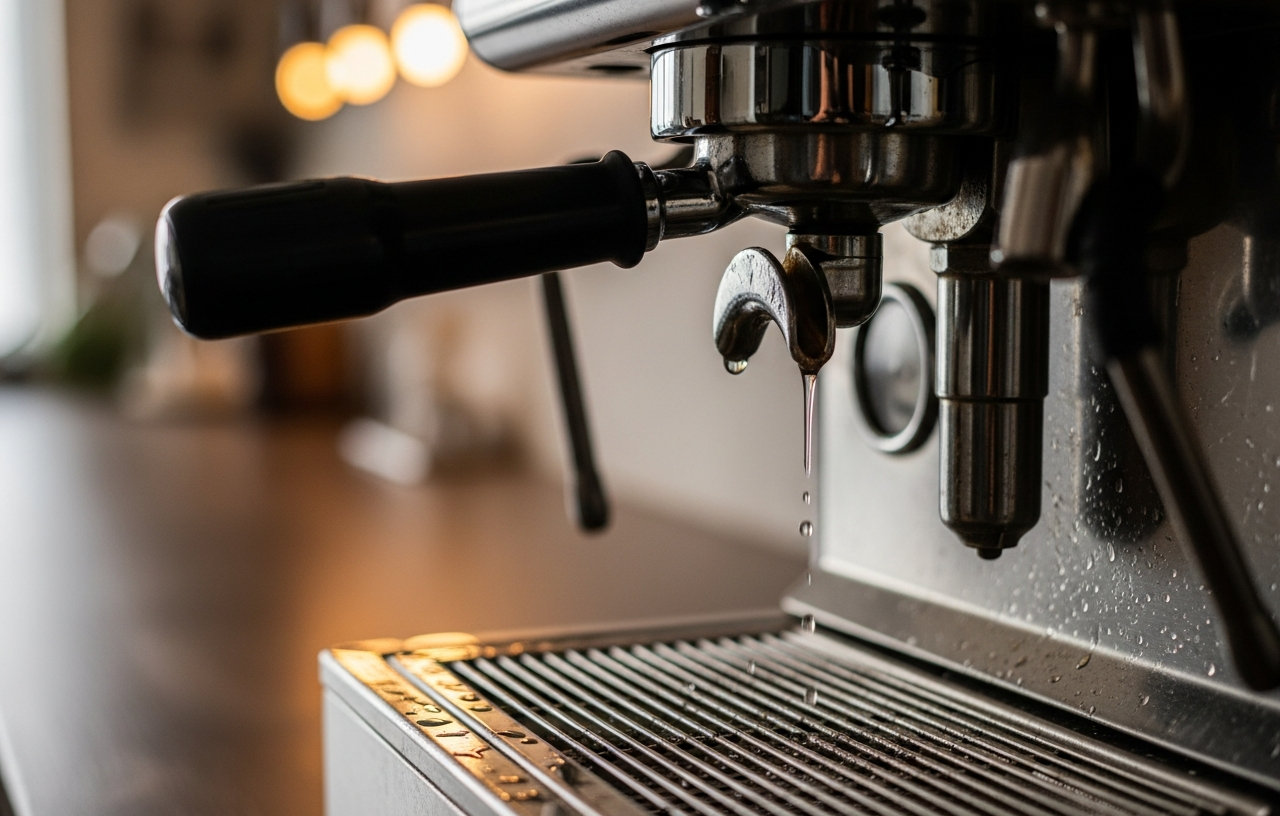
The gap between a perfectly extracted espresso shot and a watery mess can be small, often marked by unexpected drips from your machine. If your espresso machine is dripping water, it signals a problem. The most likely culprits are a worn group head gasket, a loose or improperly seated portafilter, or, less frequently, an internal leak from a hose or boiler. Each issue presents distinct symptoms and requires specific diagnostic steps. Identifying the source quickly saves both frustration and potential repair costs.
Group Head Gasket Failure
The group head gasket is a critical seal. It sits within the group head, forming a watertight connection between the portafilter and the machine during extraction. Over time, heat, pressure, and oils from coffee grounds cause these gaskets to harden, crack, or lose elasticity. This wear compromises the seal, allowing water to escape.
You can identify a failing group head gasket by observing where the water drips. If water leaks from around the edges of the portafilter, where it locks into the group head, the gasket is almost certainly the problem. This leakage often becomes more pronounced as the machine heats up or during the brewing cycle when pressure is highest.
To confirm a worn gasket, perform a simple visual and tactile check. With the machine off and cooled, remove the portafilter. Look at the gasket itself. Does it appear dry, cracked, or brittle? Does it feel hard and inflexible to the touch? Sometimes, you might even see small pieces of the gasket breaking off. Another quick test involves inserting the portafilter without coffee. If it doesn't lock in as tightly as it used to, or if you can still rotate it significantly past the usual stopping point, the gasket has likely compressed and lost its sealing ability.
Replacing a group head gasket is a common maintenance task. It is generally inexpensive and can be done at home. Expect to pay between $10 and $25 for a new gasket. Silicone gaskets are often preferred over rubber because they maintain their flexibility longer and are easier to install and remove. They also resist hardening from heat and coffee oils more effectively.
For many E61 group head machines, an upgrade to a silicone gasket improves durability and ease of use. The Cafelat Group Gasket-E61 (Red), Silicone, E61 8mm, is a popular choice for its food-grade silicone material, which is odorless and tasteless. This gasket is also known for its durability and simpler installation compared to traditional rubber gaskets. It provides a long-lasting, reliable seal.

- Upgrade your espresso group gasket
- Food Grade Silicone is odorless and tasteless
- Durable, and easier to install and remove than rubber gaskets
- 73mm (OD) x 57mm (ID) x 8mm thick
If you own a Rancilio Silvia machine, specific gaskets are available. The Espresso Machine group gasket Fits for Rancilio Silvia offers a direct replacement. They come in a two-pack, providing a spare for future maintenance. The dimensions are 2.9 inches (OD) x 2.2 inches (ID) x 0.29 inches thick, making sure of a precise fit.

- :Espresso Machine group gasket Fits for Rancilio Silvia Group Head Gasket.
- : Gasket is made of great silicone, Prevent leaks and drips .
- :SIZE:2.9 in (OD) x 2.2 in (ID) x 0.29 in thick.
- :Easy to install,just need to pull out the old oneand then replace it with our Silicone Group Gasket.
Gaggia espresso machine owners with E61 group heads also have dedicated options. The Brew Head Group Gasket for Gaggia Espresso Machines E61 - 8.5mm by D.V.M. Italy is crafted from robust stainless steel, ensuring long-lasting performance and easy cleaning. It is designed for a perfect fit, maintaining optimal functionality. Installation is simple and quick, making it a suitable replacement for Gaggia OEM group gaskets.

- Durable Material: Crafted from robust stainless steel for long-lasting performance and easy cleaning
- Perfect Fit: Designed specifically for Gaggia E61 espresso machines, ensuring a precise fit for optimal.
- Easy Replacement: Simple and quick installation, compatible with Gaggia OEM group gaskets
- Versatile Use: Suitable for various espresso drinks like espresso, cappuccino, latte, and mocha
Regular replacement of your group head gasket, typically every 6-12 months depending on usage, prevents most leaks from this area. It also helps maintain consistent brew pressure and extraction quality.
Loose Portafilter or Incorrect Seating
Sometimes, the issue is not the gasket itself but how the portafilter interacts with it. A loose portafilter, or one that is not seated correctly, cannot create a proper seal. This allows water to bypass the gasket and drip out during brewing. This problem can manifest even with a brand-new gasket if the user technique is inconsistent.
The drips from a loose portafilter typically occur around the portafilter handle area, often seeming to spray rather than a steady leak around the entire rim. It might feel like the portafilter is not locking in fully, or it might rotate slightly during extraction, causing the seal to break.
To diagnose this, first make sure the portafilter is fully inserted and twisted firmly into the group head. It should feel snug and resist further rotation. If it still drips, consider the coffee grounds. If the grind is too fine, it creates excessive resistance, leading to channeling and potential leaks. This can force water through weak points in the seal. Conversely, a dose that is too high can prevent the portafilter from fully seating against the gasket, leaving a gap.
A quick test involves adjusting your grind size. Try a slightly coarser grind and a slightly lower dose of coffee. Tamp with consistent pressure. Then, try brewing. If the dripping stops or significantly reduces, your grind or dose was likely the culprit. The repair cost for this issue is generally free, as it involves adjusting your brewing technique. However, if your existing tamper or basket is not allowing for proper puck preparation, you might consider investing in new accessories, which could cost $15 to $50. Understanding What is the Purpose of a Coffee Tamper? can help refine your technique.
Internal Component Leaks (Pump, Boiler, Hoses)
While less common than gasket issues for visible external drips, internal leaks can still manifest as water appearing from the bottom or sides of your machine. These leaks originate from components like the pump, boiler, or internal hoses. They are often more serious and require a closer inspection of the machine's internal workings.
Identifying an internal leak often requires more than just observing external drips. You might notice water pooling under the machine even when it's not in use, or drips appearing from vents or seams where no water should be. Other signs include inconsistent brew pressure, the machine struggling to heat up, or steam escaping from unexpected places. Sometimes, a rattling or unusual noise from within the machine accompanies these leaks, especially if a pump connection is loose.
To test for internal leaks, unplug the machine and allow it to cool completely. Carefully remove the outer casing, if your machine design allows for safe access. With a flashlight, visually inspect all hoses, connections, the pump, and the boiler for any signs of corrosion, cracked plastic, or water residue. Look for tell-tale white mineral deposits from evaporated water. Once the casing is off, plug the machine back in (with extreme caution) and run a short brewing cycle while observing the internal components. Look for any drips, sprays, or seeping water from connectors or components.
Repairing internal leaks can be more involved. A loose hose clamp might be a simple fix, costing nothing beyond your time. However, a cracked boiler or a failing pump will require part replacement. A new pump can cost $50 to $150, while a boiler replacement might range from $100 to $300 or more, depending on the machine. If you are not comfortable working with electrical components and pressurized water systems, seeking professional repair is advisable. Labor costs for professional repair can add $50 to $150 per hour. Consider the overall cost versus the age and value of your machine. Sometimes, investing in a Best Espresso Machines: A Complete Buying Guide might be a better option than a costly repair.
Over-Pressurization or Clogged Brew Head
While not a direct cause of dripping, issues with over-pressurization or a clogged brew head can lead to water escaping from unintended places. This often presents as sputtering or uneven water flow, which can appear as drips. A clogged brew head means water cannot flow properly through the coffee puck, building excessive pressure within the system.
You can identify these issues by observing the water flow during a brew. If the water comes out in spurts, unevenly, or not at all, and your pressure gauge (if present) shows unusually high readings, a clog or over-pressurization is likely. Water might drip from the shower screen area in an uncontrolled manner, or even back up into the drip tray in some machines. Poor extraction quality, with watery or sour shots, also points to this problem.
A quick test for a clogged brew head or pressure issue involves backflushing the machine (if it has a three-way solenoid valve) or descaling. Backflushing uses a blind basket (a portafilter basket with no holes) and a cleaning detergent to force water back through the group head, clearing out old coffee grounds and oils. Descaling removes mineral buildup from the boiler and water paths. Both processes help restore proper water flow and pressure. Many machines require regular descaling, especially in areas with hard water.
The repair cost for these issues is typically low. A backflush disk costs around $5 to $10. Descaling solution ranges from $5 to $15. These are routine maintenance items. Performing these tasks regularly prevents buildup that can lead to more serious problems. Consult your machine's manual for specific backflushing and descaling instructions, as procedures vary between models.
Preventing Future Leaks
Proactive maintenance extends the life of your espresso machine and prevents most dripping issues. Regular cleaning and part replacement are fundamental. Here are key practices:
- Replace Group Head Gasket Regularly: Change your group head gasket every 6 to 12 months, or sooner if you notice signs of hardening or cracking. This is the most common cause of leaks and an easy preventative measure.
- Clean Your Group Head: Backflush your machine with a cleaning detergent weekly (for daily users) or bi-weekly. This removes coffee oils and fine grounds that can accumulate and harden the gasket or clog the shower screen.
- Descale Your Machine: Descale your espresso machine every 1-3 months, depending on your water hardness and usage. Mineral buildup restricts water flow and can put strain on components, potentially leading to leaks. Use a descaling solution specifically designed for espresso machines.
- Use Filtered Water: Using filtered water reduces mineral buildup, extending the time between descaling cycles and protecting internal components from corrosion.
- Inspect Hoses and Connections: Periodically check visible hoses and connections for any signs of wear, cracks, or loose clamps. Address minor issues before they become major leaks.
- Proper Portafilter Seating: Always make sure your portafilter is locked firmly and correctly into the group head before brewing. Avoid overtightening, but make sure it is snug.
Addressing drips from your espresso machine promptly saves money and preserves the quality of your espresso. Most common leaks, particularly those from the group head gasket, are simple and inexpensive to fix with a little diagnostic effort. Maintaining your machine well ensures it continues to deliver excellent coffee for years.