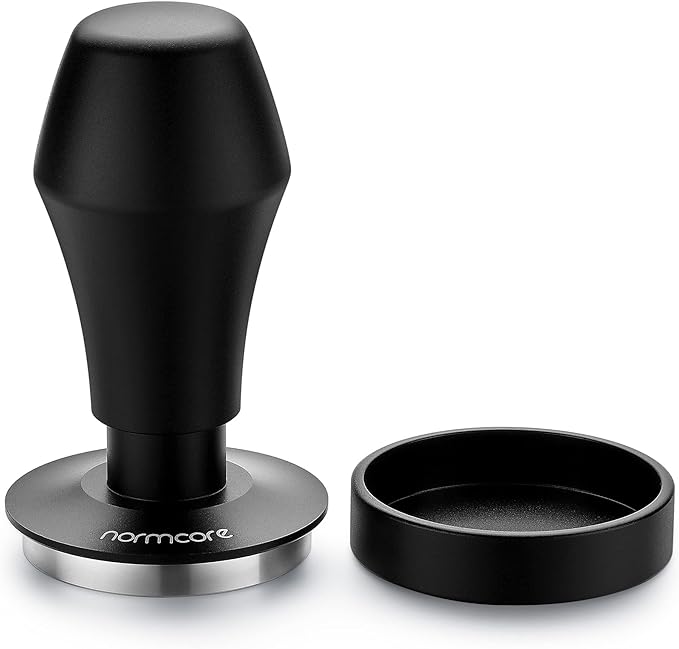
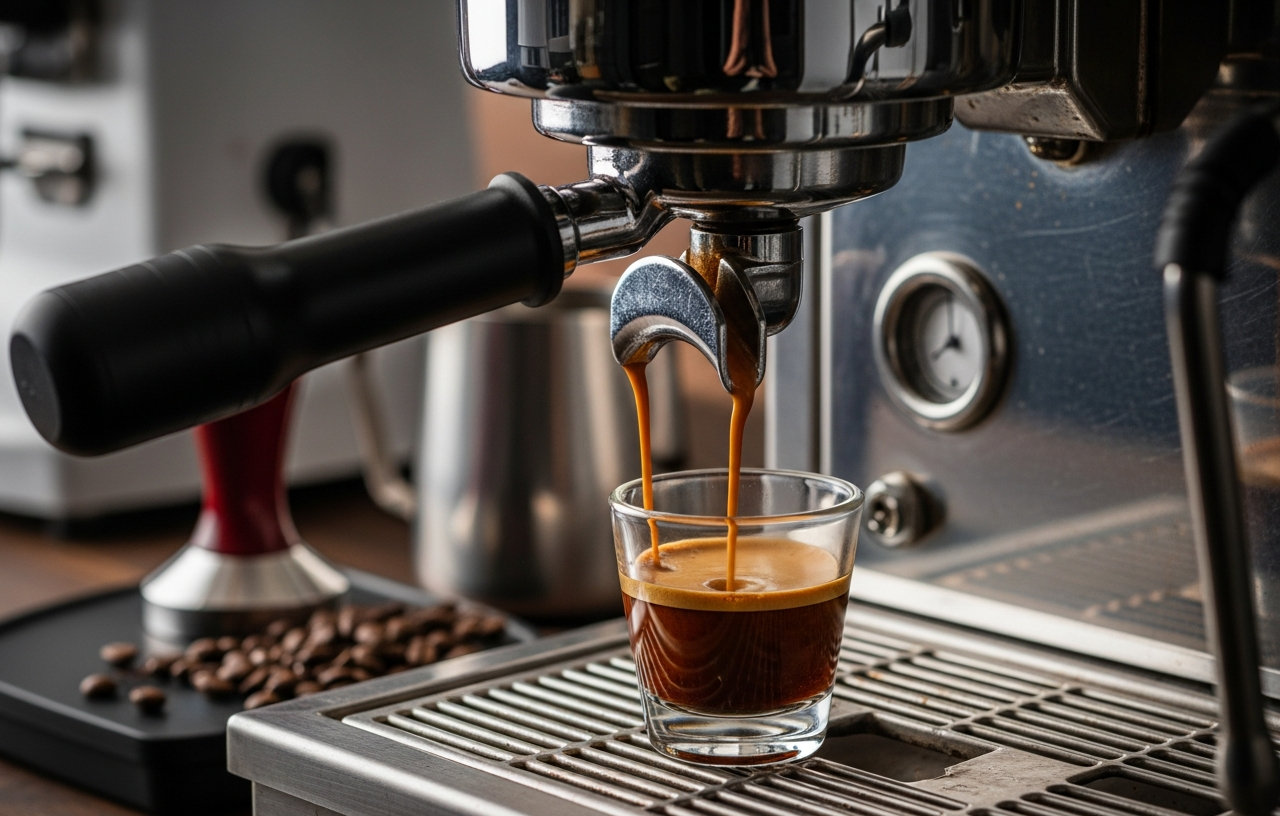
The primary purpose of a coffee tamper is to compress finely ground coffee evenly and consistently within the portafilter basket. This action is not merely about applying force; it's about creating a dense, uniform puck of coffee that will interact predictably with hot water under pressure.
Without proper tamping, espresso brewing becomes a game of chance. Water, seeking the path of least resistance, will channel through less dense areas of the coffee bed. This uneven saturation leads to over-extraction in some parts and under-extraction in others, resulting in a bitter, sour, or weak shot. The tamper's job is to create a foundation for this filter. By compressing the grounds, the tamper increases their density. This increased density reduces the void spaces between coffee particles, making it harder for water to pass through quickly. This resistance is essential for building up sufficient pressure within the portafilter, which in turn promotes optimal extraction. A well-tamped puck ensures that the water is forced to interact with all coffee particles for an adequate amount of time, extracting the soluble solids that give espresso its characteristic richness and flavor profile.
Think of it like building a dam. If the dam has cracks or is unevenly constructed, water will leak through and erode it quickly. A well built dam, however, can withstand and regulate the water flow. Similarly, a uniformly tamped coffee puck acts as a stable barrier, forcing the pressurized water to work its way through the coffee evenly, extracting the best possible flavor.
The Importance of Evenness and Consistency
Two critical aspects of tamping are evenness and consistency. Evenness refers to applying pressure uniformly across the entire surface of the coffee grounds. This means the tamp must be perfectly level. If one side is tamped harder than the other, or if the tamp is tilted, the coffee puck will be uneven. As mentioned, this leads directly to channeling. Water will rush down the side that offers less resistance, leaving the other side relatively untouched. This results in a shot that is often both bitter (from the over-extracted side) and sour (from the under-extracted side).
Consistency, on the other hand, relates to the amount of pressure applied and the resulting density of the puck. While the exact optimal pressure can vary slightly based on the coffee and grind size, maintaining a consistent level of pressure from shot to shot is key for repeatable results. Most home baristas aim for a pressure that feels firm but manageable, often described as around 20-30 pounds of force. This is not a precise science for most home users, but the feel of applying consistent pressure is something that develops with practice.
The goal isn't to tamp as hard as humanly possible. Excessive force can compact the coffee too much, making it difficult for water to pass through, which can lead to over-extraction and a choked espresso machine. The aim is to achieve a density that allows for the target extraction time and volume, typically around 25-30 seconds for a double shot. This balance is what a good tamper helps achieve.
Tamper Size and Fit
A fundamental requirement for a coffee tamper is that its base must fit the diameter of your portafilter basket precisely. Portafilter baskets come in standard sizes, with 58mm being common for commercial and higher-end semi-automatic machines. Other common sizes include 54mm (often found on Breville machines) and 51mm (common on DeLonghi and some other entry-level machines). Using a tamper that is too small will leave gaps around the edges of the coffee puck. This allows water to bypass the coffee grounds, leading to channeling and poor extraction, regardless of how evenly you tamp.
Conversely, a tamper that is too large will not fit into the basket at all. Therefore, it's essential to know the exact diameter of your portafilter basket before purchasing a tamper. Many manufacturers offer tampers in a range of sizes to accommodate different espresso machines. The fit should be snug, ensuring that the tamper's base contacts the entire inner circumference of the basket.
Materials and Design of Coffee Tampers
Coffee tampers are typically made from metal, most commonly stainless steel or aluminum, for their durability and weight. The base of the tamper is usually flat, though some are slightly convex. A flat base is generally considered the standard for achieving an even tamp, as it provides a stable surface. Convex bases can sometimes help with creating a slight swirl, but they can also make it harder to achieve a perfectly level tamp, potentially leading to channeling if not used with extreme care.
The handle of the tamper can vary significantly in design. Some are simple, cylindrical shapes, while others are ergonomically designed for comfort and grip. Materials for handles range from wood and plastic to metal. The choice of handle material and shape is largely a matter of personal preference and ergonomics. A comfortable grip can make the tamping process easier and more consistent, especially for those who make espresso frequently.
Weight is another factor that some users consider. A heavier tamper can sometimes make it easier to apply consistent pressure due to its momentum. However, the primary function of the tamper is to compress the coffee, not to rely on its weight to do all the work. The force applied by the user is the most significant element.
The Tamping Process: A step by step Approach
Achieving an effective tamp involves a few key steps:
- Grind and Dose: Grind your coffee beans to the appropriate fineness for espresso and dose the correct amount into your portafilter basket. The amount should fill the basket without being so mounded that it's impossible to tamp level.
- Distribute: Before tamping, distribute the grounds evenly in the basket. This can be done by gently tapping the portafilter or using a distribution tool (WDT tool) to break up clumps and create a level surface. Hold the tamper with your fingers wrapped around the handle and your elbow bent at approximately 90 degrees. Apply firm, consistent downward pressure, ensuring the tamper remains perfectly level. Aim to press down until you feel resistance, then give it a gentle twist (a 'polish' or 'spin' tamp) to smooth the surface, though this is debated and not strictly necessary for good results.
- Clean: Remove any loose grounds from the rim of the portafilter basket and the group head to prevent them from interfering with the seal when you lock the portafilter into the machine.
The act of tamping is a tactile experience. Developing a feel for the right pressure and consistency takes practice. Many baristas recommend practicing with a scale to measure the force applied, at least initially, to develop an understanding of what 20-30 pounds of pressure feels like. However, once a consistent feel is established, relying on that tactile feedback is often sufficient.
Troubleshooting Espresso with Tamping Knowledge
If your espresso shots are consistently too fast (under-extracted, sour, weak), the most common culprit is insufficient or uneven tamping. This allows water to flow too quickly through the coffee bed. Increasing the density of the puck by tamping more firmly and ensuring a level surface can often resolve this issue. You may also need to adjust your grind size to be finer.
Conversely, if your shots are too slow (over-extracted, bitter, burnt taste) or the machine is struggling to push water through (choking), you might be tamping too hard or too unevenly. While a fine grind is often associated with slow shots, excessive tamping pressure can also create too much resistance. Check that your grind isn't excessively fine and that your tamping pressure is firm but not excessive, and always ensure the tamp is level.
The relationship between grind size, dose, and tamp pressure is interconnected. Adjusting one often requires adjusting the others to achieve the perfect shot. However, the tamper's role in creating a stable and uniform coffee bed is the foundational step upon which all other variables build.
In essence, the coffee tamper is a tool that empowers the home barista to control a critical variable in espresso extraction. Its purpose is to prepare the coffee grounds for optimal interaction with pressurized hot water, leading to a balanced, flavorful, and crema-rich espresso shot. Mastering the simple act of tamping is a significant step toward consistently excellent espresso at home.