The Initial Investment: What Defines "Good"?
The upfront cost for a good home espresso machine typically falls between $200 and $1,500, though high end models can exceed $3,000. What makes an espresso machine "good" for home use often comes down to consistent pump pressure, stable water temperature, and effective steam power. These elements are critical for extracting flavorful espresso shots and creating rich milk foam.
Entry-Level Machines: Practical and Capable
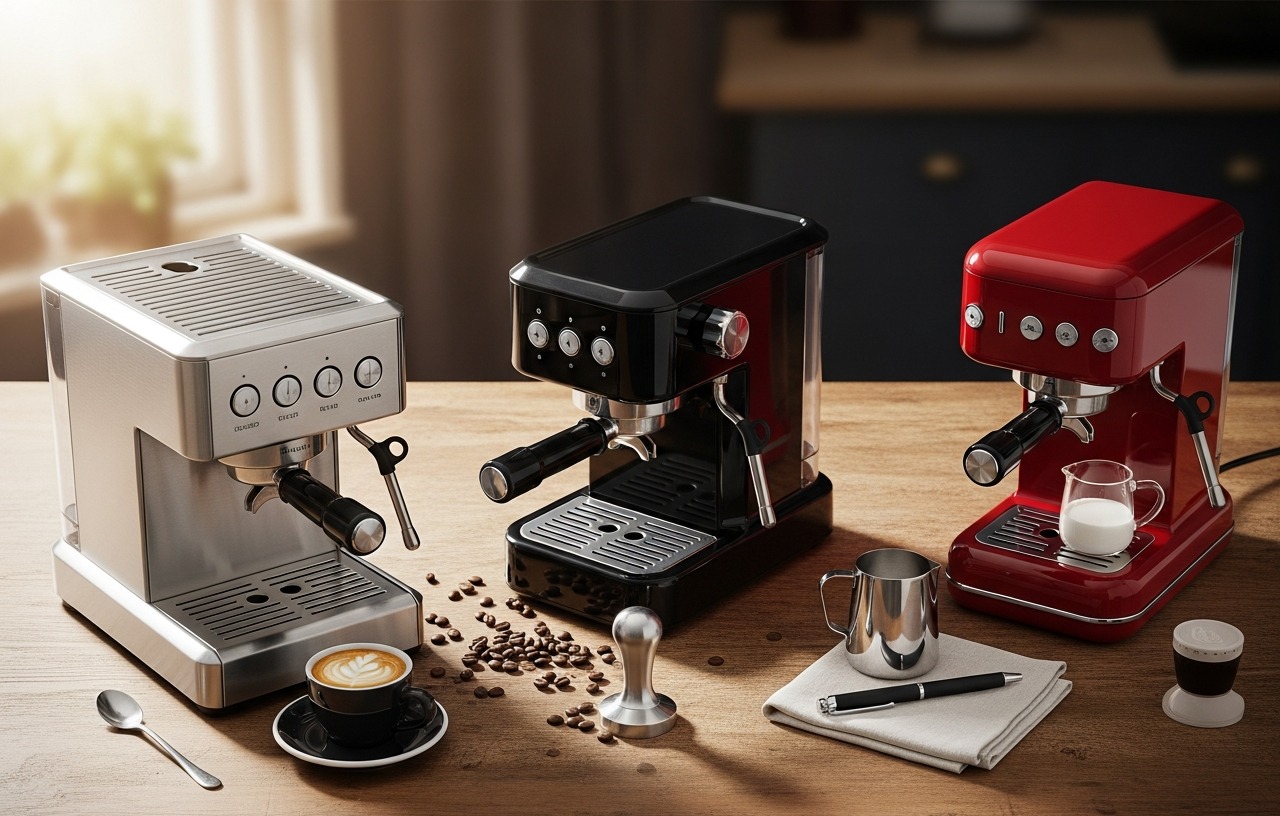
For those new to home espresso, machines in the $200-$500 range offer a solid starting point. These often include semi-automatic models like the Breville Bambino or the Gaggia Classic Pro. They provide the fundamental controls for pulling shots and steaming milk. Expect a vibration pump, a single boiler system, and relatively simple controls. These machines are excellent for learning the basics of espresso making without a significant financial commitment. They require some manual skill development, particularly with grinding and tamping, to achieve consistent results.
Many beginners find great success with these models. They produce delicious espresso when paired with a capable grinder and fresh beans. The build quality at this price point is generally functional, focusing on core performance over premium aesthetics or advanced features.
Mid-Range Machines: Enhanced Control and Durability
Stepping up to the $500-$1,500 category introduces machines with improved features and build quality. This segment includes popular options such as the Breville Barista Express (an all-in-one unit with an integrated grinder) or the Rancilio Silvia. At this price, you often gain better temperature stability through technologies like PID controllers, more robust components, and sometimes more powerful steam wands. Integrated grinders, if present, offer convenience but may not match the grind quality of a dedicated, standalone burr grinder.
These machines are built for enthusiasts seeking greater control over their espresso variables. They often feature heavier portafilters and more durable external materials. The consistency of shots improves due to better temperature management, making it easier to experiment with different beans and recipes. Expect these machines to last longer with proper care and maintenance.
For a comparison of two popular machines in this range, you can read our article: Breville Barista Express vs Bambino Plus: Which is Better?
high end Home Machines: Precision and Performance
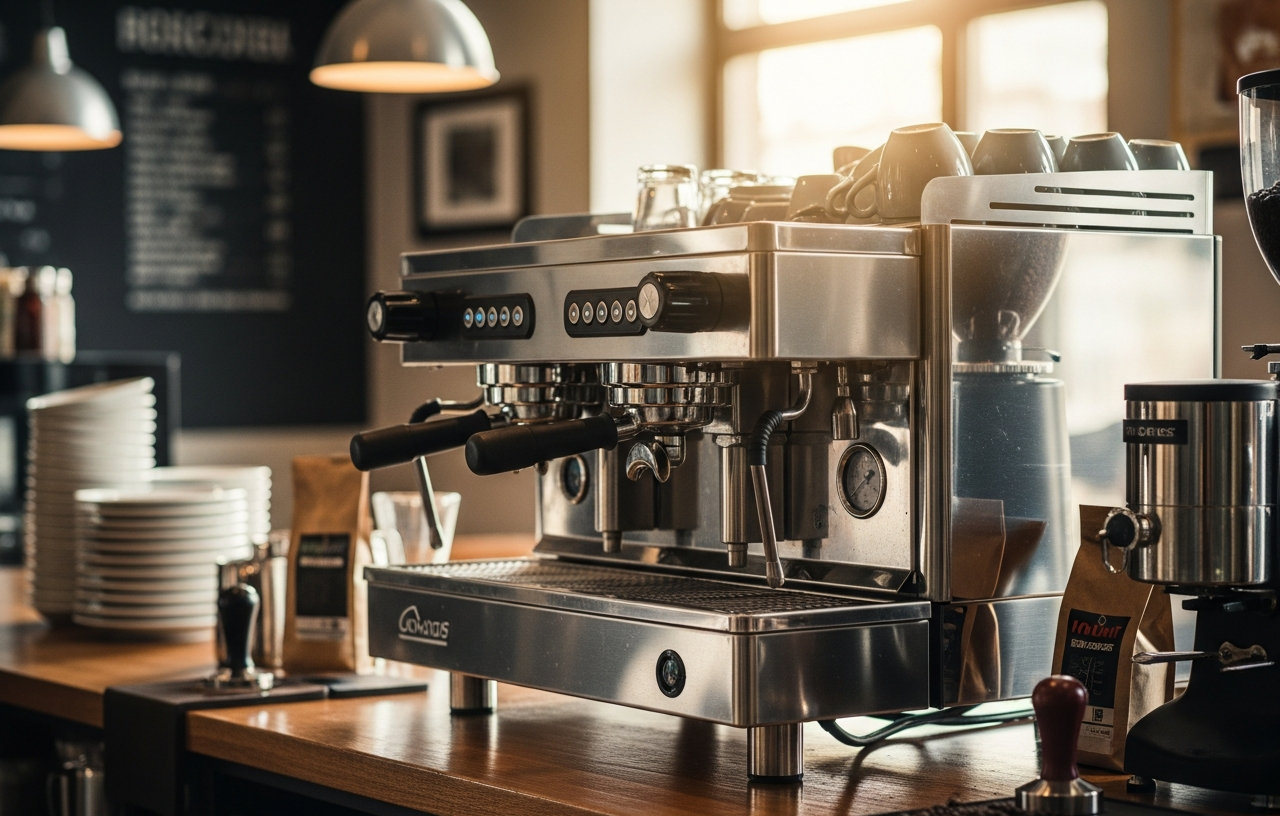
Machines costing $1,500 and above, extending past $3,000, represent the pinnacle of home espresso technology. Brands like ECM, Rocket Espresso, and Profitec populate this tier. These machines often feature dual boilers or heat exchange systems for simultaneous brewing and steaming without temperature recovery delays. They typically use quieter and more robust rotary pumps, offer advanced PID control, and are constructed with commercial-grade components like stainless steel chassis and heavy duty group heads.
This investment is for serious home baristas who prioritize ultimate control, durability, and aesthetic appeal. They are designed for longevity and often require less frequent maintenance due to their robust construction. While the initial cost is high, the quality of espresso and the user experience can rival that of a professional cafe.
Beyond the Machine: Essential Accessories and Ongoing Costs
The espresso machine itself is only part of the equation. To consistently produce high quality espresso, several accessories are essential, along with ongoing expenses for coffee and cleaning.
The Grinder is Non-Negotiable
A dedicated, high quality burr grinder is as important as the espresso machine itself, if not more so. Pre-ground coffee is unsuitable for espresso due to its rapid staling and inconsistent particle size. A good burr grinder, costing anywhere from $100 to $300 for home use, ensures fresh, uniformly ground coffee. This consistency allows for proper extraction and a delicious shot. Without a capable grinder, even the most expensive espresso machine will struggle to produce good results.
Budgeting for a grinder separately from the machine is a smart approach. Models like the Baratza Encore ESP or the Eureka Mignon Notte are popular choices for their performance and value.
Understanding the importance of grind quality can improve your coffee significantly. Learn more about grinder types here: Burr Grinder vs Blade Grinder: Which One Makes Better Coffee?
Tamping and Distribution Tools
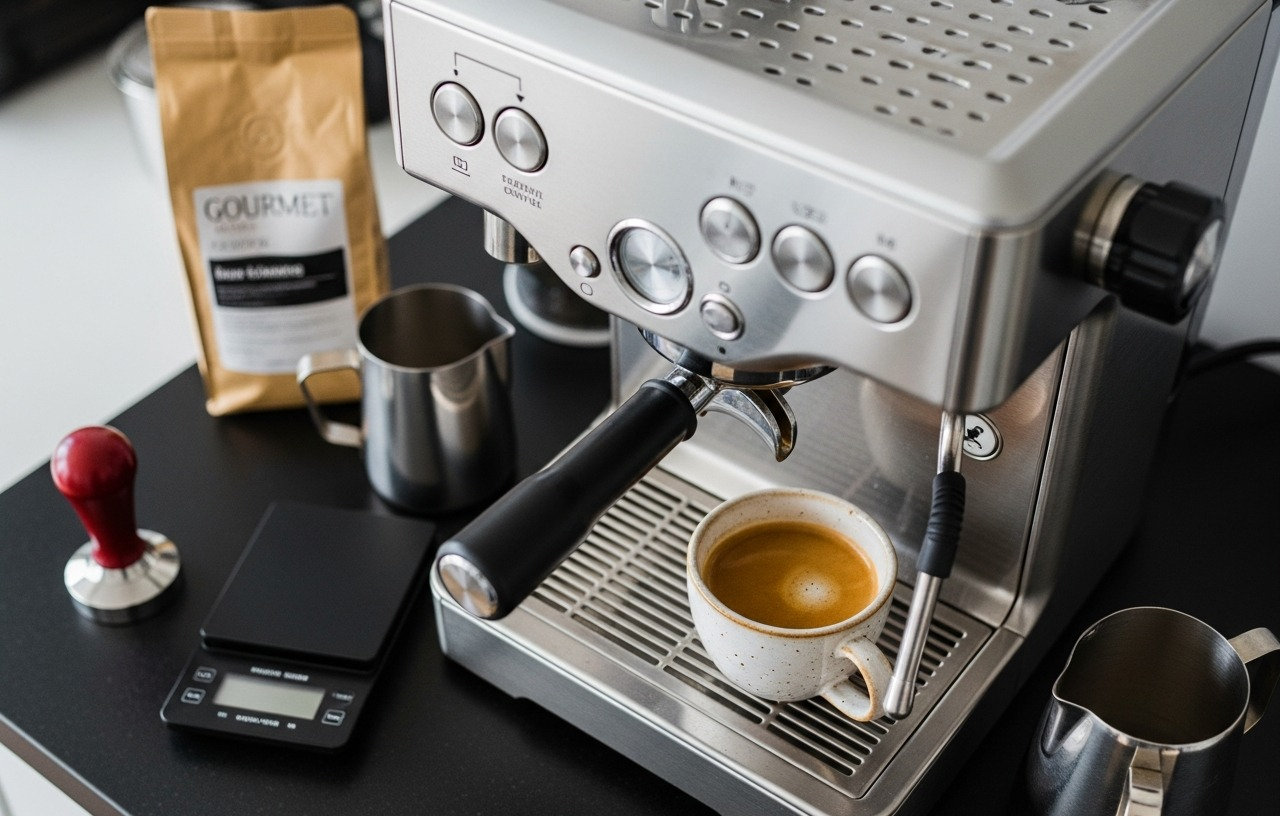
Proper puck preparation is vital for even extraction. While many machines come with a basic plastic tamper, upgrading to a solid, weighted tamper ($20-$60) improves consistency. Distribution tools, such as a WDT (Weiss Distribution Technique) tool ($15-$40), help break up clumps in the coffee grounds, promoting a more even water flow through the puck. These tools are small investments that yield noticeable improvements in shot quality.
A good tamper makes a real difference in your espresso. For more details, see: What is the Purpose of a Coffee Tamper?
Scales and Timers
Precision is key in espresso making. A small digital scale ($20-$50) that measures in 0.1-gram increments allows you to accurately measure your coffee dose and espresso yield. This eliminates guesswork and helps you replicate successful shots. This includes descaling solution, backflushing tablets or powder, group head brushes, and microfiber cloths. Expect to spend $15-$30 annually on these supplies. Neglecting cleaning leads to poor-tasting coffee and potential machine malfunctions.
Quality Coffee Beans
The most significant ongoing cost is quality coffee beans. Depending on your consumption, a 12oz bag of specialty coffee typically costs $15-$25. If you make two espressos daily, you might go through a bag every week or two, adding up to a substantial monthly expense. However, this cost is often offset by the savings from not buying daily lattes from a cafe.
The Realistic Repair Scenario: When Things Go Wrong
Even well maintained espresso machines can encounter issues. Understanding potential repair costs helps in evaluating the total cost of ownership. A common problem in many home espresso machines is a failing vibration pump, which is responsible for generating the pressure needed for extraction.
Diagnosing a Failing Pump
Symptoms of a failing vibration pump include reduced or inconsistent pressure, a machine struggling to pull shots, or unusual noises during operation. Before replacing any parts, it is wise to confirm the issue. A simple diagnostic tool like a multimeter (costing $20-$50) can help test electrical continuity to the pump, confirming if it is receiving power or if the pump motor itself is faulty. This can save money by preventing the purchase of unnecessary parts.
DIY Pump Replacement: Cost and Feasibility
Replacing a vibration pump is a repair many home users can undertake with basic mechanical skills and tools. A new Ulka or Olab vibration pump, common in many home espresso machines, can be purchased online for $45-$80. If you find one at a local appliance parts store, the cost might be slightly higher, around $60-$100. Tools required typically include a screwdriver set, pliers, and possibly a wrench. The process involves opening the machine's casing, disconnecting wires and water lines, and installing the new pump. This usually takes 1-2 hours for a moderately handy individual, plus time spent researching the specific model's disassembly.
DIY repair makes financial sense for machines under $800, especially if you are comfortable working with tools and understand basic electrical safety. The risk involves potential water damage if connections are not secure or further damage to internal components if not handled carefully. However, successfully performing this repair yourself saves significantly on labor costs.
Professional Repair: Cost and When to Choose It
If you are not confident in your DIY abilities, or if your machine is a more expensive model (over $800), opting for a professional repair is often the safer choice. Espresso machine technicians typically charge $100-$200 per hour for labor, with most shops having a minimum one-hour charge. For a pump replacement, the total cost, including the part and labor, would likely range from $150-$300. This includes the technician's expertise, specialized tools, and the assurance of a properly functioning machine.
Professional repair is also advisable for more complex issues, such as boiler leaks, electrical faults beyond a simple component swap, or problems requiring specialized diagnostic equipment. While more expensive upfront, it minimizes the risk of further damage and ensures the repair is done correctly, preserving your machine's warranty if applicable.
Total Cost of Ownership: A long term View
Considering the initial machine price, essential accessories, ongoing coffee and cleaning supplies, and the potential for a repair, the total cost of owning a good espresso machine extends beyond the purchase price. An entry-level setup (machine + grinder + basic tools) might cost around $300-$800 to start. A mid-range setup could be $800-$1,800. high end setups begin at $1,600 and can easily exceed $3,500 for the initial investment.
However, this investment often pays for itself over time. A daily $5 latte from a cafe adds up to over $1,800 annually. Owning a home espresso machine, even with all associated costs, offers substantial savings in the long run. It also provides the convenience of high quality coffee whenever you want it, tailored precisely to your taste. A good espresso machine is not just a kitchen appliance. It's an investment in daily enjoyment and significant savings over years of use.