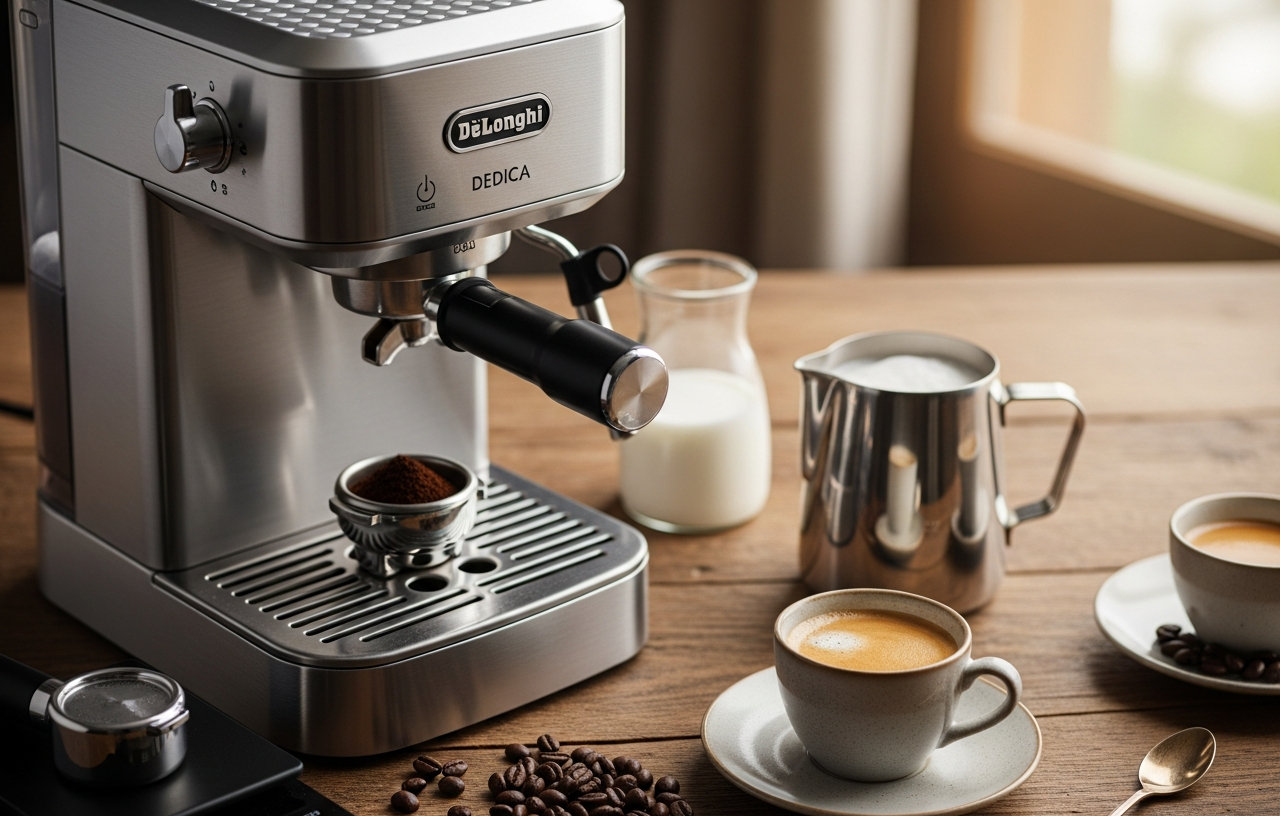
A weak stream of espresso, a silent pump, or simply no coffee flowing at all can indicate a serious problem: your De'Longhi Dedica is not building pressure. This issue quickly turns a morning ritual into frustration. Understanding the underlying causes is the first step toward pulling perfect shots again.
The De'Longhi Dedica series, including models like the EC680, EC685, and EC885, are popular home espresso machines. They deliver great performance for their size and price point, but like any appliance, they can develop issues. Low or no pressure is one of the most common complaints, often stemming from easily fixable problems.
Initial Checks for Your De'Longhi Dedica's Pressure Problem
Before diving into complex diagnostics, start with the basics. These simple checks can often resolve pressure issues quickly.
Water Tank and Priming
The most fundamental check involves the water tank. Make sure it is filled to an adequate level. An empty or near-empty tank will prevent the machine from drawing water and building pressure. If you have refilled the tank, especially after it ran dry, the machine might need priming. Consult your Dedica's manual for specific priming instructions. Generally, this involves running hot water through the steam wand until a steady stream appears, which purges air from the system.
Power and Machine Status
Confirm the machine is fully powered on and has reached its operating temperature. If the machine is still heating, it may not generate full pressure. Wait for the indicator lights to show it is ready to brew. Also, check for any error codes or unusual flashing lights, which could signal a specific internal problem.
Grind Size and Tamping: The Most Common Culprits for Low Pressure
The quality of your espresso shot relies heavily on the coffee puck. An improperly prepared puck is the leading cause of a De'Longhi Dedica not building enough pressure. The machine struggles to push water through the coffee, resulting in a weak, under-extracted shot or no flow at all.
Incorrect Grind Size
Espresso requires a very specific grind. If your coffee grind is too coarse, water passes through the puck too quickly, creating almost no resistance for the pump. This results in low pressure and a thin, watery espresso. Conversely, a grind that is too fine can create too much resistance, leading to choked shots where the water struggles to pass through, causing the machine to strain or fail to produce any liquid. A burr grinder offers the best consistency for espresso. You may find more information about grinder types in an article comparing burr grinder vs blade grinder.
Adjust your grinder incrementally. Start with a slightly finer setting if your shots are too fast and watery. If they are choked or drip slowly, try a slightly coarser setting. Small adjustments make a big difference.
Tamping Technique
Tamping compacts the coffee grounds into a dense, even puck. Consistent tamping is critical. If you tamp too lightly, the puck remains loose, allowing water to channel through without resistance. This mimics a coarse grind, leading to low pressure. If you tamp too hard, you might create an overly dense puck, similar to an extra-fine grind, making it difficult for water to pass through. Aim for firm, even pressure. A good tamper helps achieve this consistency. For more details on this accessory, consider reading What is the Purpose of a Coffee Tamper?
Diagnosing with a Bottomless Portafilter
A bottomless, or naked, portafilter is an excellent diagnostic tool for grind and tamping issues. It allows you to see the espresso extraction directly as it flows from the coffee puck. If you observe channeling (water squirting unevenly), rapid flow, or an uneven cone formation, you know your grind, distribution, or tamping needs adjustment. This visual feedback can significantly shorten the troubleshooting process for low pressure.
Normcore 51mm 3-Ear Bottomless Portafilter for De'Longhi Dedica EC680/EC685/EC885 (Top Pick)
This Normcore portafilter is specifically designed for De'Longhi Dedica EC680, EC685, and EC885 models, along with select compatible machines. The critical 3-ear fit ensures a secure lock into your machine, which is important. It is not compatible with all 51mm machines, as the ear configuration varies, so confirm your model. The bottomless design gives you a clear view of the espresso flow, making it easier to diagnose channeling, uneven extraction, or other issues that contribute to low pressure. Its construction, based on product specs, offers durability and easy cleaning, making it a valuable upgrade for any Dedica owner serious about perfecting their shots.

- IMPORTANT 3-EAR FIT NOTICE to Designed for De'Longhi Dedica EC680, EC685, and EC885, plus select compatible.
- NOT COMPATIBLE WITH ALL 51MM MACHINES to 51mm size alone does not guarantee fit. Not compatible with 2-ear.
- BOTTOMLESS FOR EXTRACTION FEEDBACK to The naked design gives you a clear view of espresso flow, helping you.
- LEARN FROM EVERY SHOT to Bottomless portafilters make espresso preparation more visible and more precise.
Normcore 51mm Naked Bottomless Portafilter 3 Ears
This portafilter is another strong option from Normcore, designed to fit the Delonghi Dedica Style Series EC680 and EC685, as well as SMEG ECF01 and EUPA coffee machines. The naked bottom gives an unobstructed view of your extraction, helping you to see exactly where pressure problems originate, whether from poor tamping or an incorrect grind. The body is completely made of 304 stainless steel, offering durability and easy maintenance, a factor often highlighted in user reviews. Upgrading to this can help refine your technique and improve shot quality.

- Only designed to fit Delonghi Dedica Style Series EC680 and EC685, SMEG ECF01. PLEASE NOTE: DOES NOT WORK.
- The naked bottom of the portafilter gives you an unobstructed view of your extraction, helping you to see.
- The body is completely made of 304 stainless steel, durability and easy maintenance. Upgrading your.
- Comfortable fit in the hand, the ergonomic handle is an elegant upgrade that brings new life to your.
Philorn 51mm Bottomless Portafilter 3 Ears
The Philorn 51mm Bottomless Portafilter offers compatibility with Delonghi Dedica Series EC680, EC685, EC885, SMEG ECF01, and EUPA espresso machines. Always confirm your machine's compatibility before purchasing, as indicated by the manufacturer. This model features a filter basket with a wood handle and a stainless steel filter holder. The 304 stainless steel used is food-grade, ensuring safety and longevity. Users appreciate that it is easier to take apart for cleaning, helping keep your bottomless filter clean and fresh without dead spots. This design supports better hygiene and contributes to consistent shot quality, which is vital for maintaining proper pressure.
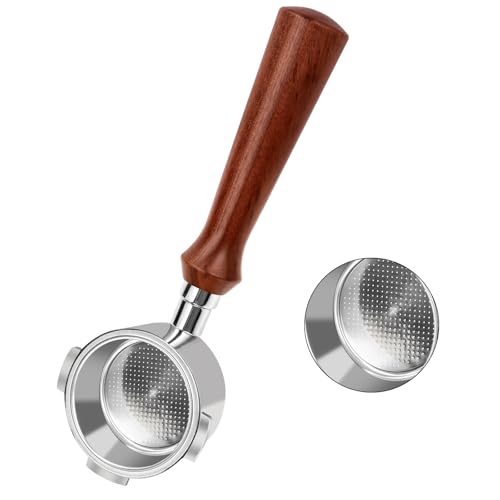
- Only compatible with Delonghi Dedica Series EC680/EC685/EC885, SMEG ECF01, EUPA. Please confirm whether it.
- Filter basket with wood handle and stainless steel filter holder. The 304 stainless steel is food-grade.
- Easier to take apart for cleaning, keep your bottomless filter clean and fresh, and has no dead spots.
- This bottomless coffee filter is a great gift for friends, family, and colleagues who are home baristas.
Clogged Components: Portafilter, Shower Screen, and Group Head
Even with perfect grind and tamp, clogs can significantly reduce or eliminate pressure. Coffee oils and fine grounds accumulate over time, restricting water flow. These clogs are a very common cause of your De'Longhi Dedica not having enough pressure.
Portafilter Basket
The small holes in your portafilter basket can become blocked by fine coffee particles. If your basket is clogged, water will struggle to pass through, leading to low pressure. After each use, always knock out the puck and rinse the basket. Perform a deeper clean periodically by soaking the basket in a solution of espresso machine cleaner or hot soapy water, then scrubbing with a brush.
Shower Screen
The shower screen, located at the bottom of the group head, disperses water evenly over the coffee puck. This screen can accumulate coffee grounds and oils on its surface and within its tiny holes. A clogged shower screen prevents water from properly saturating the coffee, leading to poor extraction and reduced pressure. Unscrew the shower screen (usually with a flathead screwdriver) and clean it thoroughly with a brush and espresso machine cleaner. Rinse well before reattaching.
Group Head
The group head itself, where the portafilter locks in, can also suffer from buildup. Backflushing, if your Dedica model supports it (some do not have a 3-way solenoid valve for true backflushing), is an effective way to clean the group head. Otherwise, use a group head brush to scrub away visible coffee residue. Regular cleaning prevents blockages that can hinder pressure development.
Descaling for Optimal Pressure and Flow
Mineral deposits, primarily calcium and magnesium, accumulate within the machine's internal water paths, boiler, and thermoblock. This scale buildup is a common issue, especially in areas with hard water. As scale thickens, it restricts water flow and reduces the efficiency of the heating element, both of which directly impact pressure.
Regular descaling is essential preventative maintenance. Most De'Longhi Dedica models have a descaling indicator light. Follow the manufacturer's descaling procedure using a specialized descaling solution. This process typically involves running the solution through the machine, allowing it to sit, and then flushing with clean water. Neglecting descaling can lead to severely restricted flow and eventual component failure, resulting in costly repairs.
Descaling solutions cost between $10 and $20 for a multi-use bottle. If your machine is severely scaled, you might need to repeat the process. For detailed instructions on maintaining your machine, refer to our article on Deep Cleaning Your De'Longhi Dedica EC680.
Investigating Pump Issues and Water Flow Problems
If you have addressed grind, tamping, and clogs, and your De'Longhi Dedica still has no pressure, the problem might lie deeper within the machine's internal components, specifically the pump.
Failing Pump
The pump is responsible for generating the high pressure needed for espresso extraction. A failing pump will either produce no pressure at all or inconsistent, low pressure. Listen to your machine. Does the pump sound different than usual (e.g., quieter, struggling, or making a high-pitched whine without water flow)? This can indicate a weakening pump. Sometimes, a pump might run but not draw water, suggesting a blockage or a pump failure.
A pump replacement for a De'Longhi Dedica is a moderately complex DIY repair, often costing $30-70 for the part. If you are not comfortable with internal repairs, a professional technician will charge between $100-250 for parts and labor, depending on the service center.
Blocked Water Lines or Solenoid Valve
Less commonly, internal water lines can become blocked by scale or debris, or the solenoid valve (if present in your model) might malfunction. A blocked line prevents water from reaching the group head, even if the pump is working correctly. A faulty solenoid valve can misdirect water or prevent it from flowing entirely. These issues are harder to diagnose without opening the machine. If you suspect these problems, it is often best to seek professional assistance.
Thermoblock and Heating Element Performance
While not a direct cause of low pressure, issues with the thermoblock or heating element can indirectly affect extraction and perceived pressure. The De'Longhi Dedica uses a thermoblock heating system, which heats water on demand.
Inadequate Heating
If the thermoblock is not heating water to the correct temperature, the water will be cooler than ideal. This cooler water can make the coffee puck more resistant to flow, leading to a weaker extraction and lower perceived pressure. A machine that takes an unusually long time to heat up or never reaches operating temperature might have a faulty heating element within the thermoblock. You might also notice that your espresso is consistently lukewarm.
Replacing a thermoblock or heating element is a more involved repair. The part itself can cost $50-100. Professional repair, including labor, could range from $150-300 or more, making it a significant expense for a machine in the Dedica's price range (typically $200-350 new). Sometimes, at this repair cost, considering a new machine might be a more economical choice.
Internal Leaks and Other Rare Malfunctions
Other, less common issues can also lead to a De'Longhi Dedica not building pressure. These are often more difficult to diagnose and repair.
Internal leaks are one such problem. If water is escaping from a cracked hose, a loose connection, or a worn O-ring, the pump will struggle to maintain consistent pressure at the group head. You might notice water pooling under the machine or hear unusual dripping sounds during operation. These leaks require careful inspection of the machine's internal components.
Sensor malfunctions, while rare, can also impact pressure regulation. If a pressure sensor or temperature sensor is faulty, the machine's control board might incorrectly instruct the pump or heating element, leading to suboptimal performance. Diagnosing these requires specialized tools and expertise. They possess the tools and knowledge to safely open the machine, diagnose complex failures, and perform precise repairs.
Getting Your De'Longhi Dedica Back on Track
Troubleshooting a De'Longhi Dedica that is not building pressure involves a systematic approach. Start with the simplest and most common issues, like grind size, tamping, and clogs. Regular maintenance, especially cleaning and descaling, prevents many of these problems from occurring.