The Importance of Espresso Grind Size
The quality of your espresso shot hinges directly on the consistency and fineness of your coffee grind. A perfectly extracted shot offers a balance of sweetness, acidity, and body. Getting there requires careful adjustment of your grinder, a process commonly known as "dialing in." This involves making small, calculated changes to your grinder's setting until the espresso flows correctly and tastes delicious.
Many factors influence your final shot, but grind size is arguably the most impactful. Too coarse, and water rushes through the coffee too quickly, resulting in an under-extracted, sour, and weak shot. Too fine, and water struggles to pass, leading to an over-extracted, bitter, and astringent shot. Finding the sweet spot means achieving the right resistance for optimal flavor compounds to dissolve into your cup.
It will cover everything from preparing your equipment to tasting your shot and making precise adjustments. Understanding how to dial in espresso grind is a fundamental skill for any home barista.
Gather Your Tools and Materials
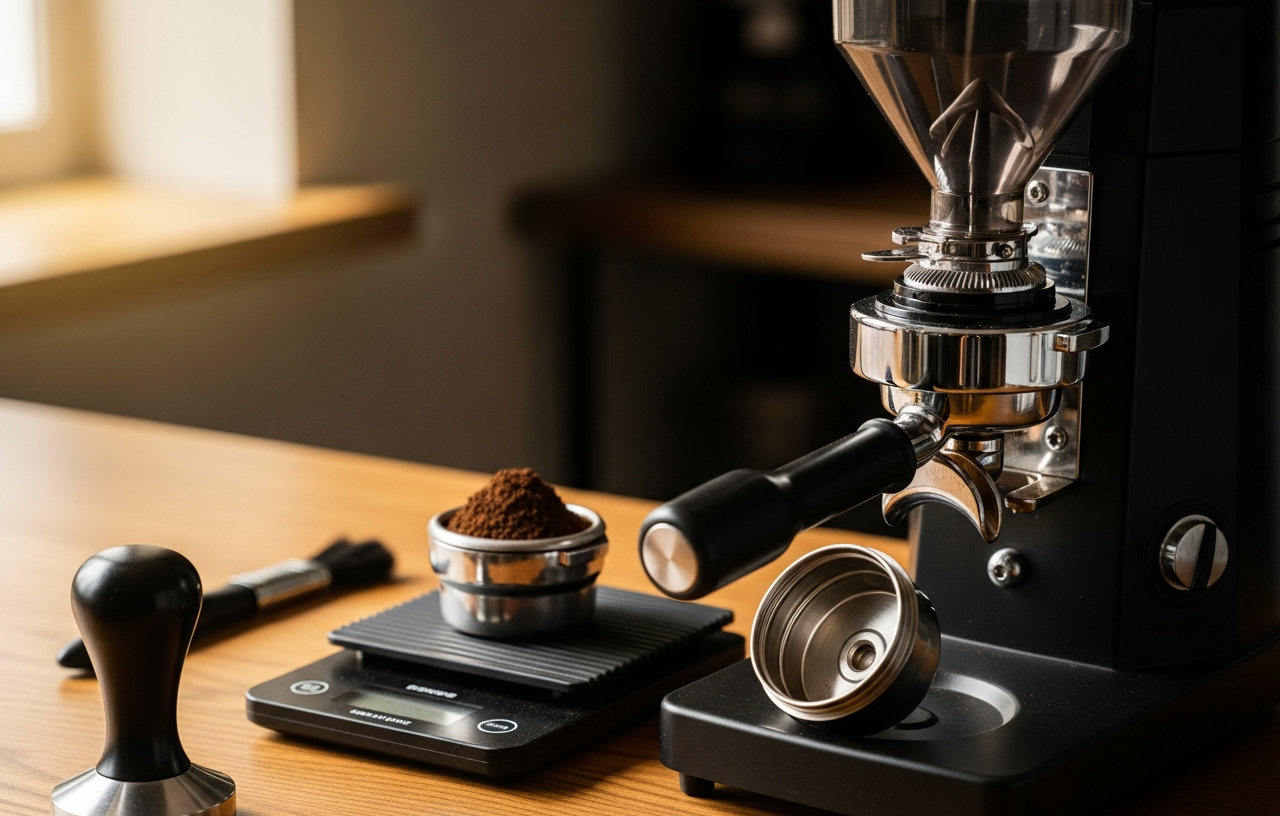
Before you begin the process of dialing in your espresso, collect all necessary items. Having them ready streamlines the workflow and makes precise adjustments easier.
- Espresso Grinder: A quality burr grinder is essential for consistent particle size. Blade grinders are not suitable for espresso.
- Espresso Machine: Make sure your machine is heated and ready to brew.
- Digital Scale with Timer:
- Freshly Roasted Coffee Beans: Use beans roasted within the last 2-4 weeks for best results. Stale beans are difficult to dial in.
- Portafilter: Clean and dry.
- Tamper: To compress the coffee grounds evenly.
- Distribution Tool (Optional but Recommended): For even coffee bed preparation.
- Cleaning Brush/Blower: To clear old grounds from the grinder chute.
- Notebook and Pen (Optional): To record your settings and results for future reference.
Understanding Espresso Extraction Fundamentals
To effectively dial in an espresso grinder, you need a basic understanding of how grind size, brew time, and yield interact. These are the core variables you will manipulate and observe.
Brew Ratio: This is the ratio of coffee grounds in your portafilter to the liquid espresso in your cup. A common starting point for espresso is a 1:2 ratio. For example, if you use 18 grams of coffee, you aim for 36 grams of liquid espresso.
Brew Time: This is the duration from when you start the pump until you reach your target espresso yield. For a 1:2 ratio, a typical target brew time is 25-30 seconds. This includes a pre-infusion phase if your machine has one. If your shot runs too fast or too slow, the grind size needs adjustment.
Taste: Ultimately, the goal is a delicious shot. An under-extracted shot often tastes sour, thin, and watery. An over-extracted shot typically tastes bitter, astringent, and can have a hollow finish. A balanced shot will have pleasant acidity, sweetness, and a rounded body.
step by step Guide: How to Dial In Your Espresso Grinder
This iterative process will guide you through making the necessary adjustments to achieve a perfectly extracted espresso.
Step 1: Clean Your Grinder
Before starting, make sure your grinder is free of old, stale coffee grounds. Residual grounds can affect the flavor of your fresh espresso and interfere with grind consistency. Use a brush or blower to clear the chute and burrs. For a more thorough cleaning, consider a deeper clean periodically.
Quick Coffee Grinder Cleaning: No Disassembly Required
Step 2: Establish a Baseline Grind Setting
Most espresso grinders have a numerical or categorical scale for grind adjustments. If you are starting with a new grinder or a new bag of beans, begin with a medium-fine setting. If your grinder has a specific espresso range, start in the middle of that range. For many home grinders, this might be around setting 5-8 out of 20, or a similar fine range.
It helps to grind a small amount of coffee (around 5-10 grams) and visually inspect the texture. It should feel like very fine sand or powdered sugar, but not like flour. It should clump slightly when squeezed between your fingers but fall apart easily.
Step 3: Weigh Your Coffee Beans
Precision is key for how to dial in espresso. Use your digital scale to weigh your whole coffee beans. A standard dose for a double shot is typically between 17 and 20 grams, depending on your portafilter basket size and personal preference. An 18-gram dose is a good starting point for most standard double baskets.
Step 4: Grind Your Coffee
Grind your precisely weighed beans directly into your portafilter. Make sure to distribute the grounds evenly as they fall to prevent clumping and uneven density. If your grinder has a dosing timer, adjust it to dispense your target weight consistently. If you have a single-dose grinder, grind all 18 grams.
Step 5: Prepare Your Puck
Even distribution and tamping are critical for consistent extraction. After grinding, use a distribution tool, or gently tap the portafilter to settle the grounds and remove any air pockets. Then, use your tamper to apply firm, even pressure to create a level coffee bed. The goal is to create a perfectly flat surface.
What is the Purpose of a Coffee Tamper?
Step 6: Pull Your First Shot
Insert the portafilter into your espresso machine. Place a cup or shot glass on your digital scale under the spouts. Tare the scale to zero. Start the espresso machine's pump and simultaneously start your timer. Observe the flow of the espresso.
Step 7: Measure and Taste
Stop the shot when you reach your target yield (e.g., 36 grams for an 18-gram dose). Note the total brew time. Now, taste the espresso. Consider its aroma, body, acidity, sweetness, and bitterness. These observations will guide your next adjustment.
Step 8: Adjust Grind Size Based on Results
Based on your measured time and taste, make an adjustment to your grinder. Remember, small adjustments are best. Changing the setting by just one or two clicks can make a significant difference.
- If the Shot Ran Too Fast (e.g., under 20 seconds) and Tastes Sour/Under-extracted: Your grind is too coarse. Adjust your grinder to a finer setting.
- If the Shot Ran Too Slow (e.g., over 35 seconds) and Tastes Bitter/Over-extracted: Your grind is too fine. Adjust your grinder to a coarser setting.
Step 9: Repeat and Refine
After adjusting the grind setting, repeat the entire process: weigh, grind, prepare the puck, pull the shot, measure, and taste. Continue this iterative process, making small adjustments, until you achieve a shot that runs within the 25-30 second window for your target yield and tastes balanced and delicious.
It often takes 3-5 shots, or sometimes more, to properly dial in an espresso grinder, especially when starting with a new bag of beans. Do not get discouraged if your first few shots are not perfect.
Troubleshooting Common Dial-In Issues
Even with a systematic approach, you might encounter specific problems. Understanding how to address these will help you master how to dial in espresso.
Shots Are Consistently Too Fast or Too Slow
If you are making significant grind adjustments and still cannot hit your target time, check other variables. Make sure your coffee dose is consistent. Verify your tamping technique is even and firm. Also, consider the freshness of your beans. Stale beans can cause shots to run too fast, even at a very fine grind setting.
Espresso Tastes Sour or Bitter
A sour taste almost always indicates under-extraction. This means the water did not have enough contact time with the coffee. The primary solution is to grind finer. If grinding finer makes the shot run too slow, you might need to slightly reduce your coffee dose or increase your yield slightly, while maintaining the finer grind.
A bitter taste typically points to over-extraction. The water spent too much time extracting undesirable compounds. The main solution is to grind coarser. If grinding coarser makes the shot run too fast, you could slightly increase your coffee dose or reduce your yield, while maintaining the coarser grind.
Channeling
Channeling occurs when water finds preferential paths through the coffee puck, leading to uneven extraction. You might see streams of espresso spurting unevenly from the portafilter spouts. This can result from poor puck preparation, such as uneven distribution or tamping, or from an overly fine grind causing too much resistance. Make sure your distribution and tamping are meticulous. A distribution tool can greatly help here. If using a bottomless portafilter, channeling is visibly obvious and indicates a need for better puck preparation or a slight grind adjustment.
Maintaining Consistency After Dialing In
Once you have successfully dialed in your espresso grinder, you will want to maintain that consistency. However, espresso is a dynamic beverage, and several factors can influence your grind setting over time.
Environmental Factors
Humidity and temperature can affect coffee beans. Higher humidity can cause beans to absorb moisture, potentially requiring a slightly coarser grind. Keep your coffee in an airtight container away from direct sunlight and heat.
Bean Freshness and Roasting
As coffee beans age after roasting, they degas less. This means you might need to adjust your grind slightly finer over the course of a week or two with the same bag of beans. Different roasts and bean origins will also require entirely new dialing-in processes. A darker roast generally requires a slightly coarser grind than a lighter roast because it is more brittle and extracts more quickly.
Grinder Wear
Over time, burrs in your grinder can wear down, affecting grind consistency. If you find yourself consistently needing to grind finer and finer for the same extraction results, it might be an indicator that your burrs need replacement.
Conclusion
Learning how to dial in an espresso grinder is a foundational skill for anyone serious about making excellent espresso at home. It is an iterative process requiring patience, observation, and a willingness to taste and adjust. By systematically approaching each shot, making small, informed grind adjustments, and paying attention to brew time, yield, and flavor, you will consistently produce delicious espresso. Enjoy the journey of refining your craft and savoring perfectly extracted shots.