What is a Bottomless Portafilter?
A bottomless portafilter, sometimes called a naked portafilter, is an espresso machine component designed without the traditional spouts or base found on standard portafilters. Instead, the portafilter basket is fully exposed at the bottom. This design allows for direct, unobstructed observation of the espresso as it begins to exit the coffee puck.
Standard portafilters feature one or two spouts that funnel the extracted espresso into a cup. The coffee streams combine and exit through these spouts. With a bottomless portafilter, the coffee flows directly from the perforations of the filter basket into the cup. This visual access is the core differentiator and the reason for its popularity among home baristas and professionals alike.
The construction typically involves a handle and a metal head designed to lock into an espresso machine's group head. The key difference lies in the absence of the solid metal bottom and spouts. The filter basket, which holds the ground coffee, sits directly within this open frame.
What Does a Bottomless Portafilter Do? Its Primary Purpose
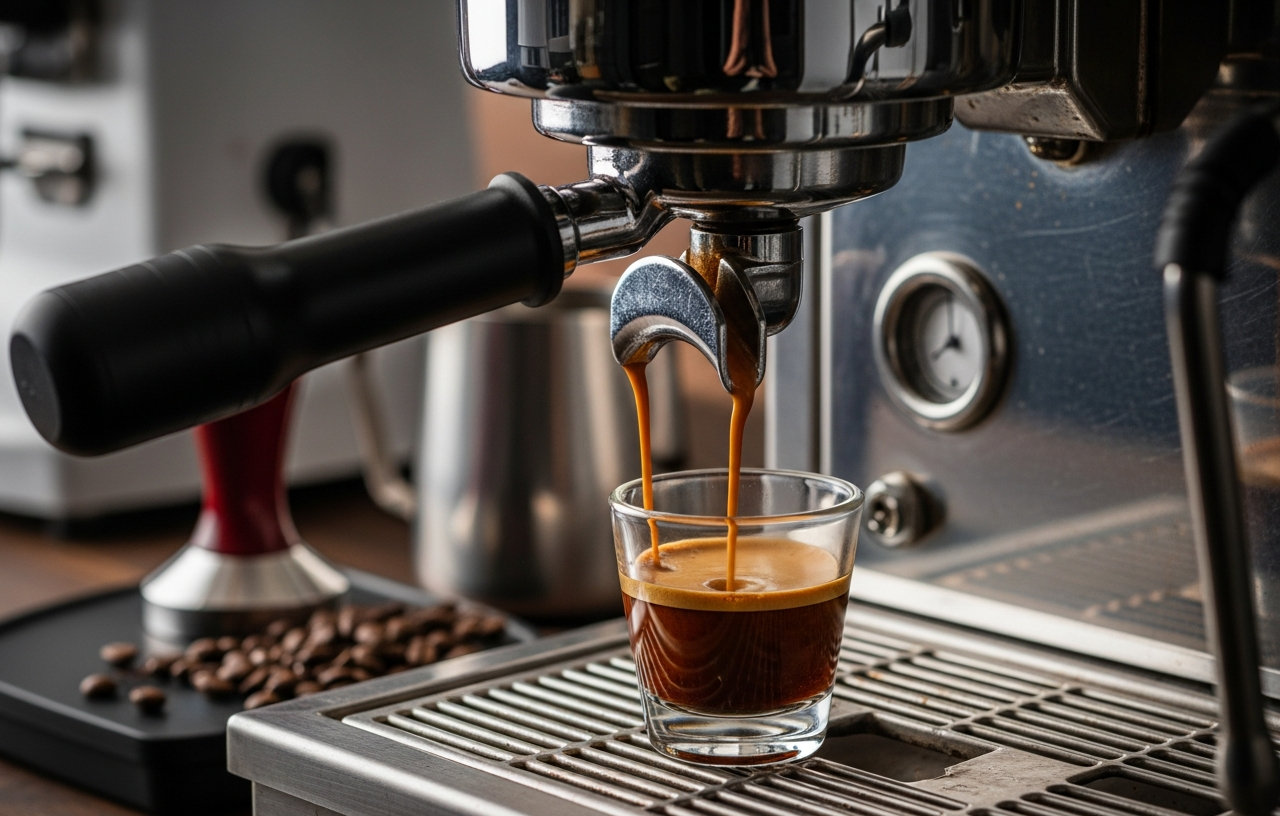
When hot, pressurized water hits the coffee puck, the resulting liquid coffee begins to drip from the basket's underside. With a bottomless portafilter, you can see exactly how the coffee forms into streams and coalesces into the final shot.
This direct view allows a barista to diagnose problems with their puck preparation. For example, if the coffee is ground too fine, the extraction may be very slow, or the coffee might spray erratically. If the grind is too coarse, the shot can flow too quickly, appearing watery.
One of the most common issues a bottomless portafilter reveals is "channeling." Channeling occurs when water finds paths of least resistance through the coffee puck, extracting some areas more rapidly than others. This results in uneven extraction, visible as thin, erratic streams of coffee spraying from different points of the basket, rather than a single, coherent cone of liquid.
Observing channeling helps a barista understand that their grind size, distribution, or tamping technique needs adjustment. An even extraction, by contrast, shows the coffee forming a uniform cone from the entire surface of the basket, gradually merging into one or two steady streams. This diagnostic capability is what makes the bottomless portafilter a valuable tool for improving espresso quality.
The Advantages of a Bottomless Portafilter for Home Baristas
Using a bottomless portafilter offers several distinct advantages for anyone serious about making better espresso at home. These benefits extend beyond simple aesthetics, impacting both shot quality and workflow.
Unrestricted Visual Feedback
The most significant advantage is the ability to see the extraction in real-time. You can immediately identify issues like:
- Channeling: Jets of coffee spraying in different directions, indicating uneven water flow through the puck.
- Uneven Extraction: Coffee flowing more quickly or slowly from one side of the basket, suggesting an unlevel tamp or poor distribution.
- Grind Size Issues: A very fast, watery stream points to a grind that is too coarse, while a very slow, dripping stream suggests a grind that is too fine.
- Dosing Problems: Too much or too little coffee can also manifest in the flow pattern.
This immediate feedback loop helps you make precise adjustments to your grinder settings, tamping pressure, and coffee distribution techniques. Without it, diagnosing these problems would rely solely on taste, which can be less precise and harder to attribute to a specific cause.
Enhanced Crema Production
Many users report that espresso shots pulled with a bottomless portafilter often have a thicker, more visually appealing crema. This is attributed to the coffee stream not making contact with the metal spouts of a traditional portafilter. When coffee hits the spouts, it can cause some of the delicate crema to dissipate. With a bottomless design, the coffee flows directly into the cup, preserving more of the crema.
Easier Cleaning and Maintenance
Traditional spouted portafilters have internal channels that can accumulate old coffee oils and grounds, becoming difficult to clean thoroughly. Over time, these residues can impart off-flavors to your espresso. A bottomless portafilter, with its open design, is significantly easier to clean. A quick rinse after each shot usually suffices, and deep cleaning is simpler since there are no hidden passages for grime to hide. This promotes better hygiene and flavor consistency.
Accommodates Different Basket Types
Bottomless portafilters typically offer more clearance, allowing them to accommodate deeper or taller filter baskets. This can be beneficial for those who prefer larger doses of coffee or use specialized precision baskets that might not fit in all spouted portafilters. The flexibility to experiment with various basket depths and designs adds to its appeal.
Challenges and Considerations for Using a Bottomless Portafilter
While the advantages are significant, using a bottomless portafilter does come with its own set of challenges. These are important to understand, especially for those new to espresso making.
Potential for Mess
The most common complaint about bottomless portafilters is the potential for mess. If your puck preparation is not precise, channeling can cause streams of espresso to spray outwards, rather than flowing neatly into your cup. This can result in coffee splattering on your machine, countertop, and even yourself. This mess is a direct consequence of the diagnostic power of the bottomless design, highlighting flaws in technique.
Steeper Learning Curve
For beginners, the immediate visual feedback can be overwhelming. Seeing every imperfection might feel discouraging initially. It requires a commitment to refining grind size, dosing, distribution, and tamping. A spouted portafilter, by contrast, can mask some of these issues, providing a more forgiving experience, even if the underlying extraction is not optimal.
Requires Consistent Puck Preparation
To avoid the mess and achieve beautiful, even extractions, consistent puck preparation is essential. This means:
- Even Grind Distribution: Making sure the ground coffee is evenly spread throughout the basket. Tools like a WDT (Weiss Distribution Technique) tool can help break up clumps and distribute grounds uniformly.
- Level Tamp: Applying consistent and level pressure to compact the coffee puck. An uneven tamp creates areas of varying density, leading to channeling. Understanding the purpose of a coffee tamper is key here.
- Correct Dose: Using the appropriate amount of coffee for your basket size and desired shot volume.
Without attention to these details, a bottomless portafilter will consistently expose flaws, leading to frustration and messy countertops.
Mastering the Bottomless Portafilter for Better Espresso Shots
Achieving a perfect shot with a bottomless portafilter is a rewarding experience. It requires attention to detail and a willingness to adjust your technique based on what you observe. Here's how to approach it:
The grind size is perhaps the single most important variable. With a bottomless portafilter, an incorrect grind size will be immediately apparent. If the espresso gushes out quickly and appears pale, your grind is too coarse. If it struggles to drip and takes an excessively long time, your grind is too fine. Make small, incremental adjustments to your burr grinder until you achieve a steady, even flow.
For a consistent flow, aim for a grind that allows the espresso to start dripping around 5-8 seconds after engaging the pump, and ideally finishes a 1.5-2 ounce shot in 25-30 seconds. This is a general guideline; specific beans and preferences may vary. If you're using a Breville Barista Express and experience grinding too coarsely, for example, there are specific adjustments to consider. Troubleshooting issues like the Breville Barista Express grinding too coarse can significantly improve your bottomless shots.
Dosing and Distribution are Critical
Even distribution of coffee grounds in the basket prevents channeling. Use a WDT tool to break up clumps and evenly spread the grounds before tamping. Gently tapping the portafilter on the counter can also help settle the grounds. Make sure your dose fills the basket appropriately, leaving a small amount of headspace between the puck and the shower screen.
Tamping Technique Matters
A level and consistent tamp is vital. Uneven tamping creates areas of different density, leading to channeling. Apply firm, even pressure straight down. Avoid twisting the tamper. The goal is a perfectly flat, uniform puck surface. The pressure itself is less important than its consistency and levelness.
Observing the Shot
Once the machine is engaged, watch the bottom of the basket closely. Ideally, you want to see small, even drops of coffee appearing across the entire surface of the basket simultaneously. These drops should then coalesce into a single, uniform stream, resembling a rat's tail or a thick, even cone. Any deviation, such as multiple thin streams, spraying, or uneven flow, indicates an issue with your puck preparation.
What is a Portafilter Basket?
Within any portafilter, bottomless or spouted, sits the portafilter basket. This small, perforated metal cup is where the ground coffee is placed. It's designed to hold a specific dose of coffee, typically 7-10 grams for a single shot or 14-21 grams for a double shot, though sizes vary. The basket's perforations allow the pressurized water to pass through the coffee and extract the espresso, while holding back the spent grounds.
There are different types of portafilter baskets:
- Single-Wall (Unpressurized) Baskets: These have many small, uniform holes and rely entirely on the fineness of the coffee grind and the tamping pressure to create resistance for proper extraction. They are standard for most serious espresso machines and are essential for using a bottomless portafilter for diagnostic purposes.
- Double-Wall (Pressurized) Baskets: These baskets have a false bottom with a single, tiny hole. They are common in entry-level machines, but they obscure the true extraction process, making them less suitable for diagnostic use with a bottomless portafilter.
- Precision Baskets: These are high quality single-wall baskets with extremely consistent hole size and distribution, designed to promote even extraction and improve clarity of flavor.
The choice of portafilter basket significantly impacts extraction quality. For a bottomless portafilter to be an effective diagnostic tool, an unpressurized, single-wall basket is required.
Cleaning and Maintenance of Bottomless Portafilters
Keeping your bottomless portafilter clean is simple and contributes to better tasting espresso. Because of its open design, cleaning is less involved than with spouted versions.
- After Each Use: Remove the spent coffee puck and rinse the portafilter and basket thoroughly under hot running water. Use a brush to dislodge any stuck grounds from the basket.
- Daily Wipe-Down: At the end of your coffee making session, wipe down the portafilter handle and head with a damp cloth to remove any coffee residue.
- Regular Deep Cleaning: Periodically, soak the portafilter head (without the handle, if it's removable) and basket in a solution of espresso machine cleaner (like Cafiza) and hot water. Follow the cleaner's instructions, typically 15-30 minutes. This will dissolve accumulated coffee oils. Rinse thoroughly afterwards.
Proper cleaning prevents old coffee oils from becoming rancid and tainting the flavor of your fresh espresso. The ease of cleaning is a practical benefit that supports consistent coffee quality.