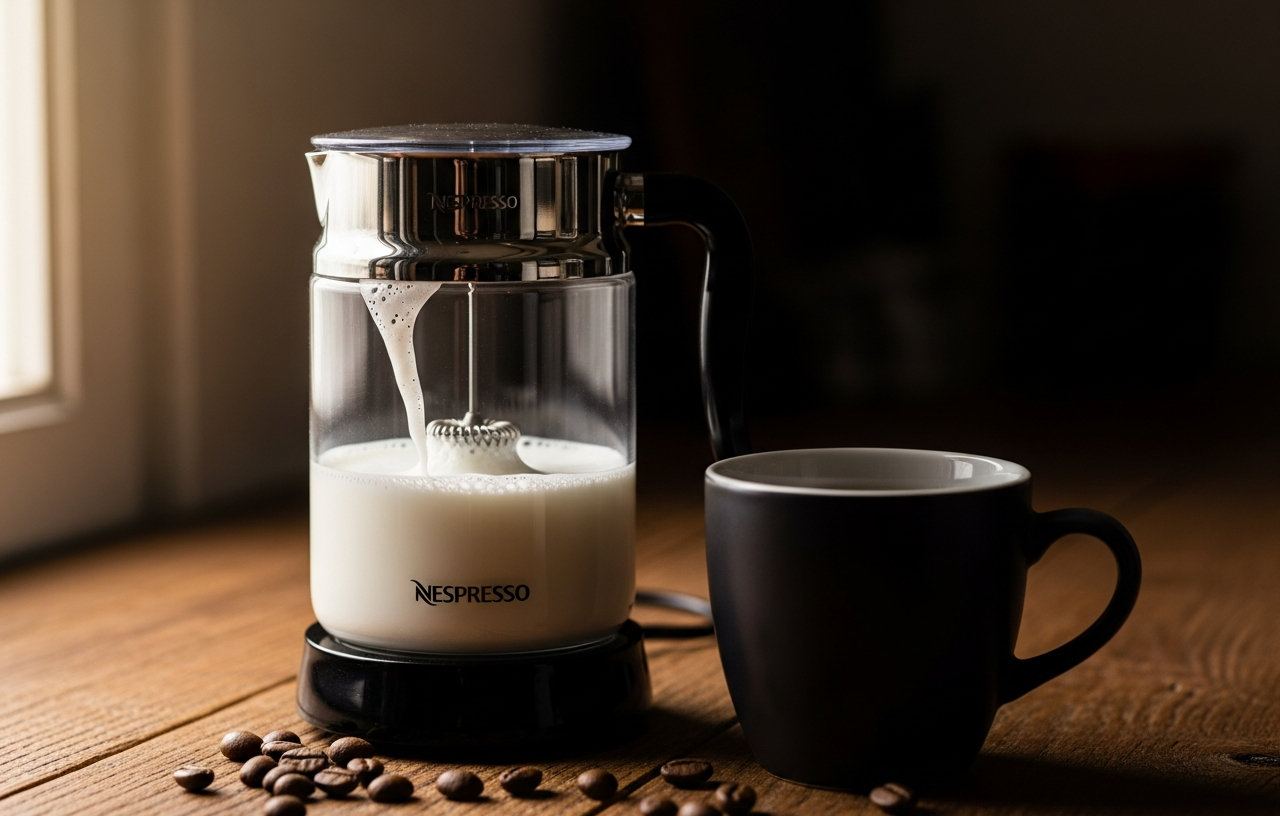
Nespresso Aeroccino Not Frothing Milk? Common Fixes
A Nespresso Aeroccino provides convenient milk froth for lattes and cappuccinos. When your nespresso aeroccino not frothing milk, it can disrupt your morning coffee routine. This common problem often has a simple solution. We will cover the most frequent reasons your nespresso foamer not working and how to get it frothing again.
Common Reasons Your Nespresso Aeroccino Isn't Frothing Milk
Many factors can cause an aeroccino not frothing milk. These range from easily overlooked details to internal component issues. We will start with the simplest and most common fixes first.
The Incorrect or Missing Whisk
This is by far the most common reason an Aeroccino stops frothing milk. Aeroccinos, especially the Aeroccino 3 and Aeroccino 4 models, use small magnetic whisks to create foam. There are typically two types of whisks: one for frothing (which has a coiled spring) and one for simply heating or stirring (a flat paddle). If you are using the flat paddle whisk when you intend to froth, you will not get foam. If your nespresso aeroccino 3 not frothing, check that the correct whisk is present and securely attached to the magnet at the bottom of the frother.
A damaged whisk can also prevent proper frothing. The delicate spring coil can bend or break over time, losing its ability to incorporate air into the milk. Visually inspect your whisk for any deformities. A new whisk costs about $10 to $20. Many users report that simply replacing the whisk resolves their issue when their nespresso aeroccino stopped frothing. It is a quick and effective troubleshooting step.
For many users, replacing the whisk solves the problem. The Whisks Compatible with Nespresso Aeroccino 3/4/Plus Milk Frother Replacement, 2 Pack are a reliable option. These rustproof stainless steel whisks make sure your Aeroccino 3, 4, or Plus model will froth milk effectively again.

- Compatible with Aeroccino 3/4/Plus Milk Frother Replacement
- Includes 2 Whisks
- Made of rustproof stainless steel 304
- Diswashersafe
Another option is the Nespresso Whisk for Aeroccino 3 Milk Frother Replacement, specifically designed for Aeroccino 3 and Plus models, ensuring a perfect fit.

- Replacement for Aeroccino 3
- Replacement for Aeroccino +
- Includes the wire and ring on a single whisk
- Replacement Equipment By Nespresso
Similarly, another set of Whisks Compatible with Nespresso Aeroccino 3/4 /Plus Milk Frother Replacement, 2 Pack offers a backup, made from durable stainless steel 304.

- Compatible with Aeroccino 3/4/Plus Milk Frother Replacement
- Includes 2 Whisks
- Made of rustproof stainless steel 304
- Diswashersafe
Incorrect Milk Type or Temperature
The type and temperature of milk play a significant role in frothing quality. For the best foam, milk should be cold, ideally straight from the refrigerator. Cold milk allows the Aeroccino more time to incorporate air before it heats up, resulting in a more stable and voluminous froth. Room temperature milk will heat too quickly, leading to less foam. Whole milk generally froths best due to its fat content, which helps create a stable microstructure in the foam. Two percent milk also performs well.
Skim milk can produce a large volume of foam, but it often has larger bubbles and can be less stable, collapsing quickly. Plant-based milks vary widely in their frothing capabilities. Barista-blend oat milk or almond milk often contain stabilizers that help them froth well, while regular versions may struggle to produce any significant foam. If your aeroccino not frothing, try switching to a different brand or type of milk, especially a cold, whole dairy milk or a barista-specific alternative. This change alone can often fix the issue.
Residue and Cleaning Issues
Milk contains proteins and fats that can leave a sticky residue if the Aeroccino is not cleaned immediately after each use. This residue can build up on the whisk, the magnetic drive shaft at the bottom of the frother, or the interior walls. A layer of dried milk can prevent the whisk from spinning freely or sitting correctly on its magnetic base. This directly impacts the frothing action, leading to little or no foam. A dirty unit is a common reason for an aeroccino stopped frothing.
Make sure to clean your Aeroccino thoroughly after every use. Unplug the unit from its base. Remove the whisk and wash it with warm, soapy water. Use a soft, non-abrasive sponge or cloth to wipe down the interior of the frother, paying close attention to the bottom where the whisk sits. Avoid using abrasive cleaners or scourers, as these can damage the non stick coating. Rinse thoroughly and dry completely before reassembling. Regular, diligent cleaning often restores a nespresso aeroccino not working to full functionality. Cleaning supplies are negligible in cost, making this an easy and cost effective solution.
Overfilling or Underfilling the Aeroccino
Nespresso Aeroccino units have clearly marked maximum and minimum fill lines on the interior. These lines are critical for proper operation, especially when frothing. If you overfill the Aeroccino, there isn't enough space for the milk to expand into foam. This can result in hot milk, but minimal froth, and sometimes even cause spills. Conversely, if you underfill the unit, the whisk may not be fully submerged in the milk or may not have enough milk to effectively create foam. This is a simple oversight that can make your nespresso aeroccino 3 not frothing.
Always pour milk to the appropriate fill line. For frothing, there is usually a lower maximum line to account for the volume increase. For heating milk only, there is a higher maximum line. Consult your specific Aeroccino model's manual for precise guidance on these levels. Adhering to these guidelines ensures the whisk can operate optimally within the correct volume of milk, maximizing frothing potential.
Power Supply or Base Issues
For your Aeroccino to froth milk, it needs a consistent power supply. Start by checking the basics. Make sure the power base is securely plugged into a working electrical outlet. Sometimes the base itself can be faulty. If the light on your Aeroccino does not illuminate or it fails to heat the milk, the problem could be with the power base or the electrical connection. Try plugging the base into a different outlet to rule out a circuit issue. Also, make sure the Aeroccino jug is seated correctly on its power base; a poor connection can prevent it from turning on or functioning properly. If your nespresso aeroccino not working at all, this is a good place to start.
While less common, the power base itself can malfunction. If you have ruled out other issues and the unit receives no power, a faulty base might be the culprit. A replacement base can cost between $30 and $50, depending on the model. This is still less expensive than a full unit replacement in some cases. However, if the unit is older, it might be more economical to consider a new frother.
Magnet Malfunction
The Aeroccino uses a magnetic coupling to spin the whisk. A small magnet is located in the base of the frother, and another inside the whisk itself. If the magnet in the frother's base becomes dislodged or loses its magnetic strength, the whisk will not spin, or it will spin weakly. This is an internal component failure. It is relatively rare for the magnet to fail under normal use, but it can happen, especially if the unit has been dropped or subjected to impact. You might notice the whisk wobbling instead of spinning smoothly, or not spinning at all even with power.
Diagnosing a magnet malfunction without disassembling the unit can be difficult. If the whisk does not spin despite being correctly placed, cleaned, and with adequate power, a magnet issue could be the cause. Unfortunately, this type of internal damage is usually not repairable by the average home user. Professional repair for such an issue is generally not cost effective, as the labor costs would likely exceed the price of a new Aeroccino.
Heating Element Problems
The Aeroccino heats milk using an induction heating element integrated into the base. If this element malfunctions, the milk might not reach the optimal temperature for frothing, or it might not heat at all. Frothing relies on both aeration and heat to create stable foam. If the milk remains cold or only warms slightly, the foam will be weak and dissipate quickly. This issue often presents as the whisk spinning correctly, but the milk simply does not get hot enough, or the unit stops heating prematurely.
Like a magnet malfunction, a faulty heating element is an internal component failure. There are no user-serviceable parts for this issue. If your Aeroccino is no longer heating milk effectively, and you have confirmed it is not an issue with the power supply or base connection, the heating element is likely compromised. Repairing a heating element in a small appliance like an Aeroccino is typically not practical or economical. The cost of parts and specialized labor would almost certainly surpass the cost of purchasing a brand new unit.
When to Consider Professional Repair or Replacement
At this point, you face a decision: professional repair or replacement. For most Aeroccino models, professional repair is rarely the most economical option. The cost of labor for diagnosis alone can range from $50 to $100. If internal components like the heating element or magnetic drive need replacing, parts costs add significantly to this, often pushing the total repair bill close to or even above the price of a new unit.
A new Nespresso Aeroccino 3 typically costs around $70 to $100. An Aeroccino 4, with its additional features, might range from $100 to $130. Considering these prices, if your unit is more than a few years old and experiencing an internal failure, replacement offers better value. You get a brand new unit with a fresh warranty, rather than investing in an older appliance that might develop new issues soon after repair. If you are considering upgrading your entire coffee setup, you might find our guide on Best Espresso Machines: A Complete Buying Guide helpful.
Extending Your Aeroccino's Lifespan
Prevention and proper care can significantly extend the life of your Nespresso Aeroccino and minimize issues like your aeroccino not frothing. Consistent and immediate cleaning is the most important step. Milk residue is corrosive and can damage the non stick coating and internal components over time. Always rinse and wipe out the frother after each use. Make sure the whisk is also cleaned thoroughly.
Use your Aeroccino according to the manufacturer's instructions, especially regarding fill lines and milk types. Avoid using metal utensils inside the frother, as they can scratch the non stick surface. Store the whisk securely, perhaps inside the unit or in a designated spot, to prevent it from getting lost or damaged. Gentle handling of the unit and its components will help avoid accidental drops or impacts that could damage internal magnets or electrical connections.