Optimal espresso extraction relies on consistent water temperature and pressure. Mineral buildup, commonly called limescale, compromises both. Hard water contains calcium and magnesium deposits, which accumulate on heating elements and within water lines inside your espresso machine. This accumulation restricts water flow, causes temperature fluctuations, and can ultimately damage internal components. Regular descaling removes these deposits, making sure your machine operates efficiently and produces delicious coffee.
Ignoring limescale leads to slow water delivery, weaker espresso shots, and a noticeable drop in beverage temperature. Over time, a neglected machine can suffer permanent damage, leading to expensive repairs or premature replacement. Descaling is a simple maintenance task that preserves your investment and protects your daily coffee ritual.
Understanding Limescale and Its Impact
Limescale is a hard, chalky deposit consisting mainly of calcium carbonate. It forms when hard water is heated and evaporates, leaving behind mineral residues. Inside an espresso machine, this occurs rapidly on the heating elements and in the narrow water pathways. Even filtered water can contain enough minerals to cause buildup over time.
The presence of limescale affects your espresso in several ways. It acts as an insulator, making the heating element work harder to reach the correct temperature. This leads to inconsistent and often cooler brew temperatures. The restricted water flow through scaled-up pipes also reduces pump pressure, which is essential for proper espresso extraction. You might notice your shots running too quickly or too slowly, and the flavor profile of your coffee will be noticeably duller or more bitter.
When to Descale Your Espresso Machine
The frequency of descaling depends on several factors: the hardness of your local water, how often you use your machine, and the specific model. Most manufacturers recommend descaling every 1 to 3 months. If you use filtered water or live in an area with softer water, you might extend this to every 3-4 months. For those with very hard water or daily heavy use, monthly descaling is advisable.
Many modern espresso machines, including Breville and Nespresso models, feature an indicator light or message that tells you when descaling is necessary. Pay attention to these prompts. Even without an indicator, watch for signs like slower water flow, reduced steam pressure, a louder pump, or a change in your espresso's taste. These are clear signals that limescale is affecting performance.
Tools and Materials Needed
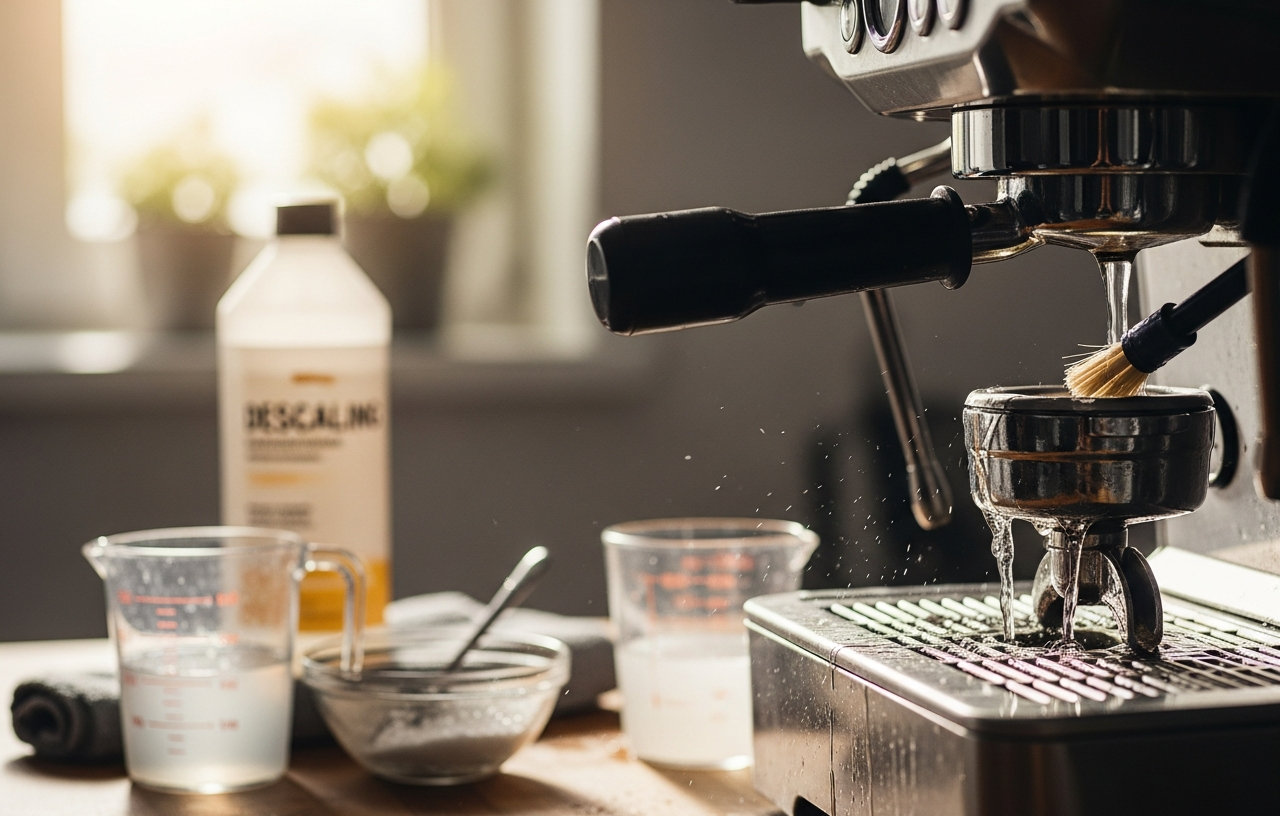
Before you begin the descaling process, gather these items:
- Descaling Solution: Always use a commercial descaling solution designed for coffee machines. Never use household vinegar, especially with aluminum components, as it can corrode internal parts and leave a lingering taste.
- Clean Water: Fresh, filtered water for rinsing.
- Large Container or Bowl: To catch the descaling solution and rinse water as it exits the machine.
- Soft Cloth or Sponge: For wiping down the exterior.
- Measuring Cup: To accurately mix the descaling solution.
Recommended Descaling Solutions
Choosing the right descaling solution is important. Different solutions offer various concentrations and formulations, but all aim to safely dissolve mineral buildup without harming your machine's internal components.
Universal Descaling Solution (Top Pick)
This 2-pack descaler offers a highly effective, USA-made formula suitable for a wide range of coffee makers, including Keurig, Nespresso, and Delonghi. Each bottle provides two uses, making it an economical choice for regular maintenance. It works to clean and rinse away residue and oil buildup in addition to eliminating limescale. Using this solution helps preserve your machine by preventing mineral accumulation.

- 2-Pack Coffee Descaler and Cleaner - Clean and rinse away residue and oil buildup in your coffee maker.
- Highly Effective, Made in USA Formula - Unlike most common solutions, our coffee machine cleaner uses just.
- Preserves Your Machine - Using a coffee descaling solution eliminates limescale and mineral build-up to.
- Highly Compatible - Not just for Keurig descaling solution - our coffee maker descaler is also compatible.
Tillbrook Breville-Specific Descaler
The Tillbrook Coffee Machine Descaler is specifically formulated for Breville espresso machines. Its concentrated formula makes it easy to use, providing four cleanings per 16 oz bottle. This offers excellent value, potentially supplying a year's worth of descaling for many users. The advanced solution is crafted with powerful, all-natural ingredients that effectively remove limescale and mineral buildup, helping to maintain your Breville machine's performance.

- Introducing Tillbrook Coffee Machine Descaler specifically formulated for Breville,the best choice for.
- Our concentrated formula is easy to use and provides remarkable value with 4 cleanings per bottle. Simply.
- Our advanced descaling solution is carefully crafted with powerful, all-natural ingredients that removes.
- No matter how you make your morning cup of joe, we’ve got your back. Our solution is suitable for cleaning.
Durgol Swiss Espresso Descaler
Durgol Swiss Espresso is a professional-grade descaler designed for all brands of espresso machines and coffee makers. This solution effectively removes limescale and calcium buildup. It comes in a convenient 4.2 fluid ounce pack, with each portion designed for one use. Simply pour one portion into your machine's water tank and run the decalcification program. It's a reliable option for thorough kitchen maintenance.

- This professional grade cleaner will remove limescale and calcium buildup
- Use on all coffee makers as a solution for your toughest kitchen maintenance
- Pour 1 portion into your machine's water tank and run the decalcification program
- This package includes two 4.2-fluid-ounce bottles of our commercial sanitizer
step by step Guide to Descaling Your Espresso Machine
The general descaling process is similar across most machines, but always consult your specific machine's manual for precise instructions. Here is a general method:
-
Step 1: Prepare Your Machine (5 minutes)
Turn off and unplug your espresso machine. Remove the portafilter, any baskets, and the drip tray. Empty the water reservoir completely. If your machine has a water filter, remove it before descaling. Discard any coffee beans from the grinder if it's an integrated model like a Breville Barista Express.
-
Step 2: Prepare the Descaling Solution (2 minutes)
Refer to your descaling solution's instructions for the correct dilution ratio. Typically, you will mix a specific amount of descaler with water in your machine's water tank. Fill the reservoir to the maximum fill line with the solution. Make sure the solution is well mixed.
-
Step 3: Run the Descaling Cycle (20-40 minutes)
Place a large heat-resistant container under the brew head and steam wand. Turn on your machine. Many machines have a dedicated descaling mode or button. Activate this mode according to your machine's manual. The machine will begin to pump the descaling solution through its internal components, intermittently dispensing it from the brew head and steam wand. Allow the full cycle to complete. Some machines will pause during the cycle, requiring you to empty and replace the catch container.
-
Step 4: Specific Instructions for Breville Espresso Machines (20-40 minutes)
To descale a Breville espresso machine, such as the Barista Express, begin by emptying the water tank and removing the water filter. Fill the tank with the descaling solution mixture. Turn the machine on. Press and hold the '1-Cup' and '2-Cup' buttons simultaneously for about five seconds until the 'CLEAN/DESCALE' light illuminates. The machine will then run the descaling cycle, dispensing the solution from the group head and hot water/steam wand. The 'CLEAN/DESCALE' light will flash during this process. Follow the prompts to empty the drip tray and refilling the water tank if necessary during the cycle. This process helps to decalcify the Breville espresso machine thoroughly. Make sure to run solution through both the brew head and the steam wand to clean all pathways. The cycle finishes when the light turns off.
For more specific cleaning steps, you may find Breville Barista Express vs Bambino Plus helpful for understanding machine differences.
-
Step 5: Specific Instructions for Nespresso Machines (15-30 minutes)
To descale a Nespresso machine, empty the capsule container and drip tray. Fill the water tank with the descaling solution. For Nespresso OriginalLine machines, simultaneously press the Lungo, Espresso, and Ristretto buttons (or similar combination depending on model) for three seconds to enter descaling mode. For Nespresso VertuoLine machines, press and hold the brew button and the lever down for three seconds. The machine's lights will blink to indicate descaling mode. Place a large container under the coffee outlet. The machine will dispense the solution in stages. Follow any prompts on screen or in the manual. This process will help you how to descale a Nespresso machine effectively.
-
Step 6: Specific Instructions for Keurig Coffee Machines (15-25 minutes)
Although this guide focuses on espresso machines, many home coffee enthusiasts also own a Keurig. To descale a Keurig coffee machine, empty the water reservoir. Pour the descaling solution into the reservoir, following the product's dilution instructions. Place a large mug on the drip tray. Start the descaling cycle by pressing the brew button without a K-Cup in the brewer. Repeat this process until the 'Add Water' indicator illuminates. Let the brewer stand for 30 minutes, then discard the contents of the mug. Continue running brew cycles with solution until the reservoir is empty.
-
Step 7: Rinse Thoroughly (15-30 minutes)
After the descaling cycle is complete and the water tank is empty, rinse the tank thoroughly with clean water. Fill the reservoir with fresh, clean water. Place a clean, large container under the brew head and steam wand again. Run several full cycles of clean water through the machine, just as you did with the descaling solution. This is a critical step to remove any lingering descaling solution. Repeat this rinsing process at least two to three times, or until you are certain no residue remains. If your machine has a steam wand, make sure to run clean water through it as well.
-
Step 8: Clean Exterior and Accessories (5 minutes)
Once rinsing is complete, turn off and unplug the machine. Reinstall the water filter if you removed it. Clean the drip tray, portafilter, and any other removable parts with warm, soapy water. Wipe down the exterior of the machine with a damp cloth. Reassemble all components. Your espresso machine is now ready for use.
Important Safety Precautions
Always prioritize safety during the descaling process. Descaling solutions contain acids that can irritate skin and eyes. Wear gloves and eye protection if you are sensitive or concerned about splashes. If the solution comes into contact with your skin or eyes, rinse immediately with plenty of water. Keep descaling solutions out of reach of children and pets.
Make sure the area where you are working is well-ventilated. Never mix descaling solutions with other cleaning products, especially bleach, as this can create dangerous fumes. Always unplug the machine before disassembling any parts or cleaning the exterior.
Maintaining Your Machine Between Descales
Regular descaling is only one part of proper espresso machine maintenance. Daily cleaning helps prevent buildup and ensures optimal performance. After each use, purge the steam wand and wipe it down with a damp cloth to remove milk residue. Backflush your portafilter regularly with a blind basket and a small amount of espresso machine cleaner to remove coffee oils. Empty and rinse the drip tray daily.
Using filtered water can significantly slow down limescale accumulation, extending the time between descaling cycles. Many machines have an integrated water filter in the reservoir; replace these according to the manufacturer's recommendations. A well maintained machine not only lasts longer but also consistently produces better-tasting espresso.
Conclusion
Descaling your espresso machine is a fundamental aspect of its care. It prevents mineral buildup, maintains brew quality, and extends the life of your appliance. Consistent maintenance means consistent quality in your cup.