Espresso quality begins long before the hot water meets the coffee. It starts with the grinder. An inconsistent or incorrect grind size can ruin even the finest beans, leading to under-extracted sourness or over-extracted bitterness. Mastering your coffee grinder is the most important step for making delicious espresso at home.
This guide explains how to get the perfect espresso grind. It covers everything from selecting the right equipment to making the precise adjustments for your machine.
The Core of Espresso: Why Grind Matters So Much
Espresso brewing relies on high pressure. Hot water is forced through a compacted bed of coffee grounds. For proper extraction, the water needs to encounter even resistance as it passes through the coffee puck.
A very fine, consistent grind creates this necessary resistance. Each tiny coffee particle offers surface area for extraction. When all particles are uniform, water flows through them evenly.
The Impact of Grind Size
- Too Coarse: If the grind is too coarse, water flows through too quickly. There is not enough resistance. The coffee particles do not have enough contact time with the water. This results in under-extraction, producing a weak, sour, and watery espresso shot.
- Too Fine: If the grind is too fine, water struggles to pass through the compacted coffee bed. The flow will be very slow, or the machine might choke completely. This leads to over-extraction, resulting in a bitter, astringent, and often burnt-tasting espresso.
Burr Grinders for Espresso
A quality burr grinder crushes coffee beans between two abrasive surfaces, producing uniform particles. Blade grinders, by contrast, chop beans randomly. This creates a mix of fine dust and large chunks, which is unsuitable for espresso. The resulting espresso will be inconsistent and unpredictable.
A burr grinder ensures the even particle size needed for consistent water flow and optimal extraction.
Read more about burr vs. blade grinders.
Choosing the Right Grinder for Espresso
Not all burr grinders are designed for espresso. Espresso demands very fine adjustments. Look for grinders that offer a wide range of settings, especially on the finer end of the spectrum.
Key Grinder Features for Espresso
- Burr Type: Both conical and flat burrs work well for espresso. Conical burrs are common in home espresso grinders. Flat burrs are often found in higher-end commercial units. Both can produce excellent results if designed for espresso.
- Adjustment Mechanism: Look for grinders with micro-adjustments or stepless adjustment. Stepless grinders allow infinite changes between settings. Stepped grinders with many small steps can also be effective.
- Dosing Options: Some grinders allow grinding directly into a portafilter. Others grind into a container. Direct grinding simplifies the workflow and reduces mess.
Recommended Espresso Grinders
Breville BCG820BSS Smart Grinder Pro, Brushed Stainless Steel (Our Top Pick)
The Breville Smart Grinder Pro is a popular choice for home espresso enthusiasts. It offers 60 unique grind settings, giving you significant control over particle size. This programmable conical burr grinder includes precision digital time. You can adjust and program grind time in 0.2-second increments. This level of control is essential for repeatable dosing. The Smart Grinder Pro allows you to grind directly into your portafilter, an airtight container, or a gold tone filter basket. This flexibility makes it suitable for various brewing methods, but its fine adjustment range truly shines for espresso.
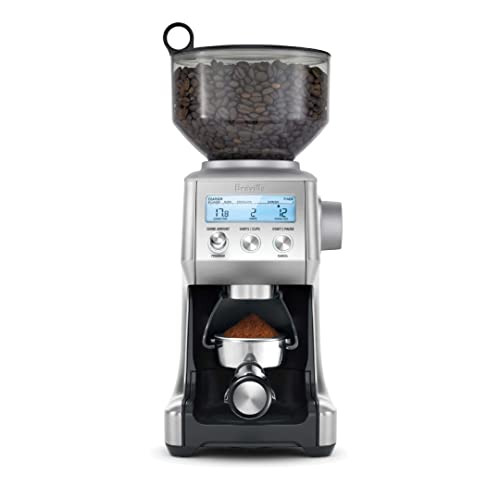
- The Breville Smart Grinder Pro includes 60 unique settings to this programmable conical burr grinder offers.
- Precision digital time allows you to adjust and program grind time in 0.2 second increments giving you.
- The Breville Smart Grinder Pro lets you grind directly into the portafilter, an airtight container, gold.
- Intelligent settings help your coffee and espresso bean grinder achieve precise results regardless of how.
AMZCHEF Burr Coffee Grinder, 48 Settings, Less Static Mess, Metallic Silver
The AMZCHEF Burr Coffee Grinder provides 48 grind settings, making it versatile for different brewing needs. You can easily adjust from a fine espresso grind to a coarse French press setting. It also handles pour over, drip coffee, and cold brew applications. Its precision grinding system aims to deliver uniform coffee grounds for better flavor extraction and a balanced taste. The intuitive LED touchscreen makes grinding effortless. You can easily select 2 to 12 cups and set precise grinding times. This helps in consistent dosing for your espresso.
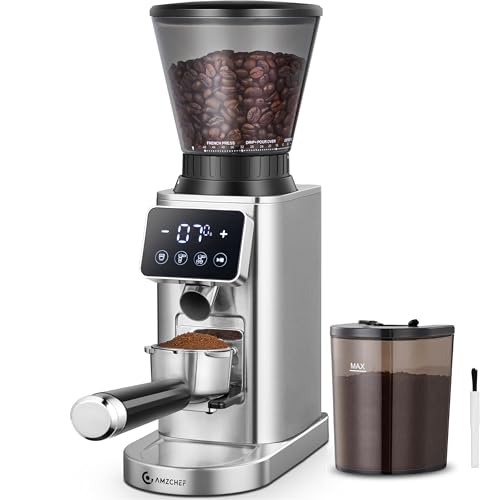
- Easily adjust from fine espresso to coarse French press, pour over, drip coffee, and cold brew for your.
- Precision grinding system delivers uniform coffee grounds for better flavor extraction, balanced taste.
- Intuitive LED touchscreen makes grinding effortless. Easily select 2 to 12 cups, set precise grinding times.
- Built-in anti-static technology and stainless steel container help reduce cling and spills, making it.
SHARDOR Conical Burr Espresso Coffee Grinder Electric with Precision Timer 2.0, Touchscreen Adjustable Burr Mill with 51 Precise Settings
The SHARDOR Conical Burr Espresso Coffee Grinder is a solid option for those seeking precision at a competitive price. It features premium 40-millimeter stainless steel conical burrs. With 51 precise grind settings, you can adjust from the finest for espresso to the coarsest for French press. The grinder also includes precision cup quantification and an electronic timer. The cup number can be selected from 1 to 12 cups, ensuring consistent dosing for your brewing needs.

- Premium 40 Millimeter Stainless Steel Conical Burr: Designed to minimize grinding heat and protect the.
- 51 Precise Grind Settings: Adjustable from the finest for Espresso to the coarsest for French Press Grind.
- Precision Cup Quantification and Electronic Timer: The cup number can be selected from 1 to 12 cups.
- Easy to Use: Grind the coffee beans directly into portafilter by using portafilter cradle which is a.
Find the best espresso machines for home use.
How to Grind Coffee Beans for Espresso: A step by step Guide
Learning how to use espresso grind coffee properly involves a systematic approach. Follow these steps to achieve consistent and delicious results.
-
Gather Your Equipment (Time: 1-2 minutes)
Before you begin, make sure you have everything ready. You will need a quality burr grinder, fresh whole coffee beans, your espresso machine, a portafilter, and a coffee scale. A dosing funnel for your portafilter can also be helpful to reduce mess.
-
Select Fresh Whole Beans
The quality of your beans directly impacts your espresso. Use whole beans roasted within 2-3 weeks for optimal flavor. Grind your beans immediately before brewing. Pre-ground coffee loses its aroma and flavor quickly, leading to flat espresso.
-
Determine Your Dose (Time: 1 minute)
Consistency is vital. Use a coffee scale to weigh your whole beans. For a standard double shot of espresso, 18-20 grams of coffee is a common starting point. Weighing your dose ensures repeatable results. This eliminates one variable when you are dialing in your grind.
-
Adjust Your Grinder to an Espresso Setting
This is how to get the perfect espresso grind. Start with a fine setting on your grinder. For grinders with numbered settings, a middle-to-lower range is often a good starting point. For example, on a Breville Smart Grinder Pro with 60 settings, a setting between 10-15 is a reasonable initial choice. The texture of the ground coffee should resemble powdered sugar or fine flour. It should feel slightly sticky and clump together when squeezed between your fingers, but not be chunky or overly clumpy. Avoid a sand-like texture, which is too coarse for espresso.
-
Grind Your Coffee (Time: 10-20 seconds per dose)
Place your pre-weighed beans into the grinder's hopper. If your grinder allows, grind directly into your portafilter. Many espresso-focused grinders have a cradle for this purpose. Alternatively, grind into a dosing cup and then transfer the grounds to your portafilter. Make sure the grounds are evenly distributed within the portafilter basket. Distribute them by gently shaking or tapping the portafilter.
Safety Note: Always keep your fingers clear of the grinder burrs during operation. Unplug the grinder before attempting any cleaning or maintenance.
-
Distribute and Tamp (Time: 10-15 seconds)
Even distribution of grounds in the portafilter prevents channeling. Channeling occurs when water finds paths of least resistance, leading to uneven extraction. Use a WDT (Weiss Distribution Technique) tool to break up clumps and distribute grounds evenly. Then, use a coffee tamper to apply firm, level pressure to the coffee bed. The goal is a uniform, compacted puck. Consistency in tamping pressure helps ensure predictable results.
-
Brew Your Espresso and Evaluate (Time: 25-30 seconds)
Lock your portafilter into the espresso machine's group head. Start the brewing process. Observe the extraction. For a double shot, aim for 36-40 grams of liquid espresso in 25-30 seconds. The flow should begin slowly, then transition into a steady, honey-like stream. Pay attention to the color, the thickness of the stream, and the crema formation.
Dialing In Your Grind for the Perfect Espresso
Achieving the perfect espresso grind is often an iterative process. Even with the best grinder, you will need to adjust your settings based on your specific beans, machine, and environmental factors. This is called 'dialing in'.
Adjusting Based on Shot Time and Taste
- Shot is Too Fast (Under 20 seconds for 36-40g): This indicates your grind is too coarse. The water is flowing through the coffee bed with too little resistance. Adjust your grinder to a finer setting. Make small changes, usually one or two steps at a time on a stepped grinder, or a tiny turn on a stepless one.
- Shot is Too Slow (Over 35 seconds for 36-40g) or Chokes: This means your grind is too fine. The water is struggling to penetrate the coffee puck. Adjust your grinder to a coarser setting. Again, make incremental adjustments.
- Taste Indicators: If your shot tastes sour, it is often under-extracted (too coarse). If it tastes bitter or astringent, it is likely over-extracted (too fine).
Remember that factors like bean freshness, roast level, and even humidity can influence the ideal grind setting. Keep notes on your grind settings, dose, and resulting shot times. This helps you replicate good results and troubleshoot issues more effectively.
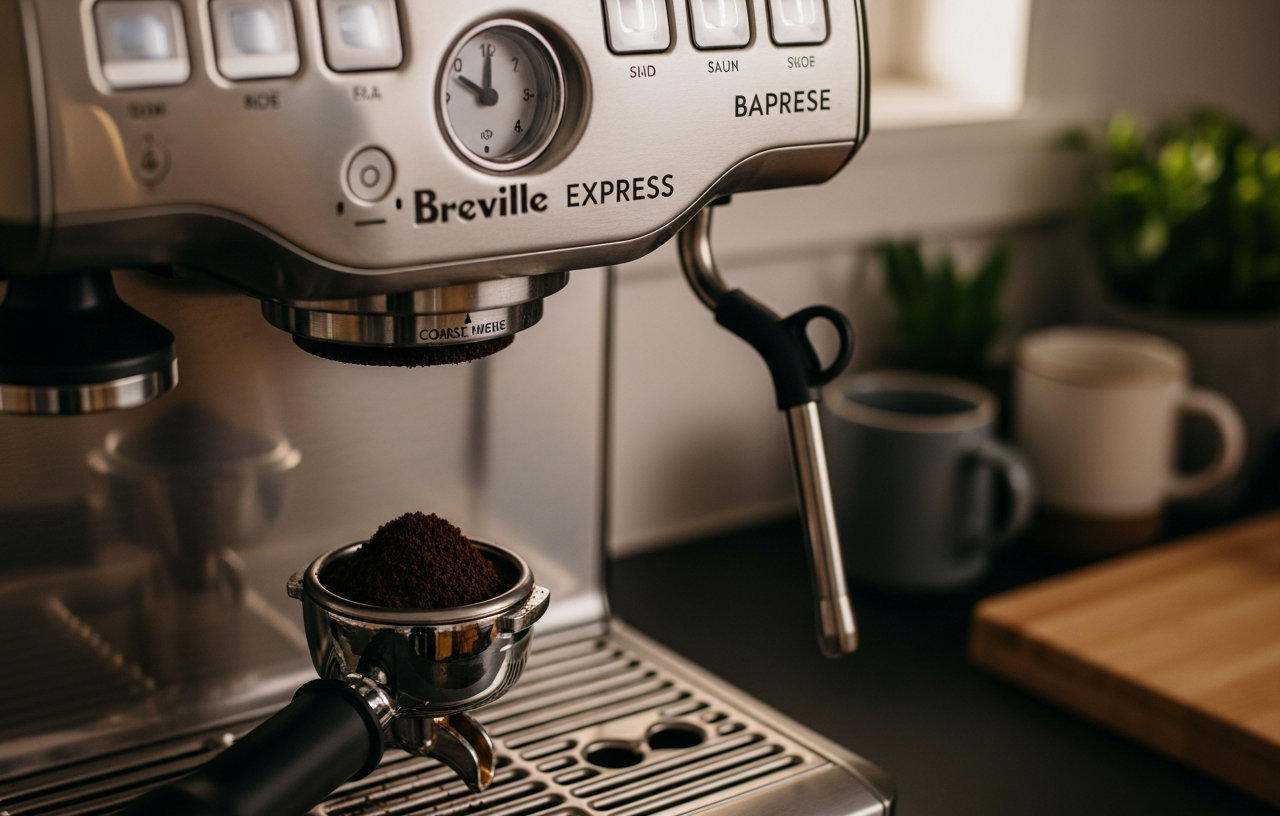
Some grinders, like those found in the Breville Barista Express, allow for internal burr adjustments if the external settings are not fine enough. These internal adjustments offer another layer of control.
Troubleshoot a Breville Barista Express grinding too coarse.
Grinder Maintenance for Longevity and Flavor
Regular cleaning is not just about keeping your grinder functional. It significantly impacts the quality and consistency of your espresso. Old coffee oils and residual fines can build up on the burrs and in the grinding chamber.
This buildup affects grind consistency. It also introduces stale, rancid flavors into your fresh coffee. These unwanted flavors will transfer directly to your espresso.
Cleaning Schedule
- Daily: Brush out any loose grounds from the chute and burrs. A small brush or vacuum attachment works well.
- Weekly/Bi-Weekly: For regular home use, perform a deeper clean every one to two weeks. This might involve using grinder cleaning tablets or disassembling the burrs for a thorough brush and wipe down.
Keeping your grinder clean ensures optimal performance and preserves the true flavor of your coffee.
Learn how to clean your coffee grinder quickly.
Conclusion
Grinding coffee beans for espresso is a fundamental skill for any home barista. It requires attention to detail and a willingness to experiment. By understanding the importance of grind size, investing in a quality burr grinder, and diligently dialing in your settings, you will consistently pull delicious, balanced espresso shots. Your efforts at the grinder translate directly into a better cup.