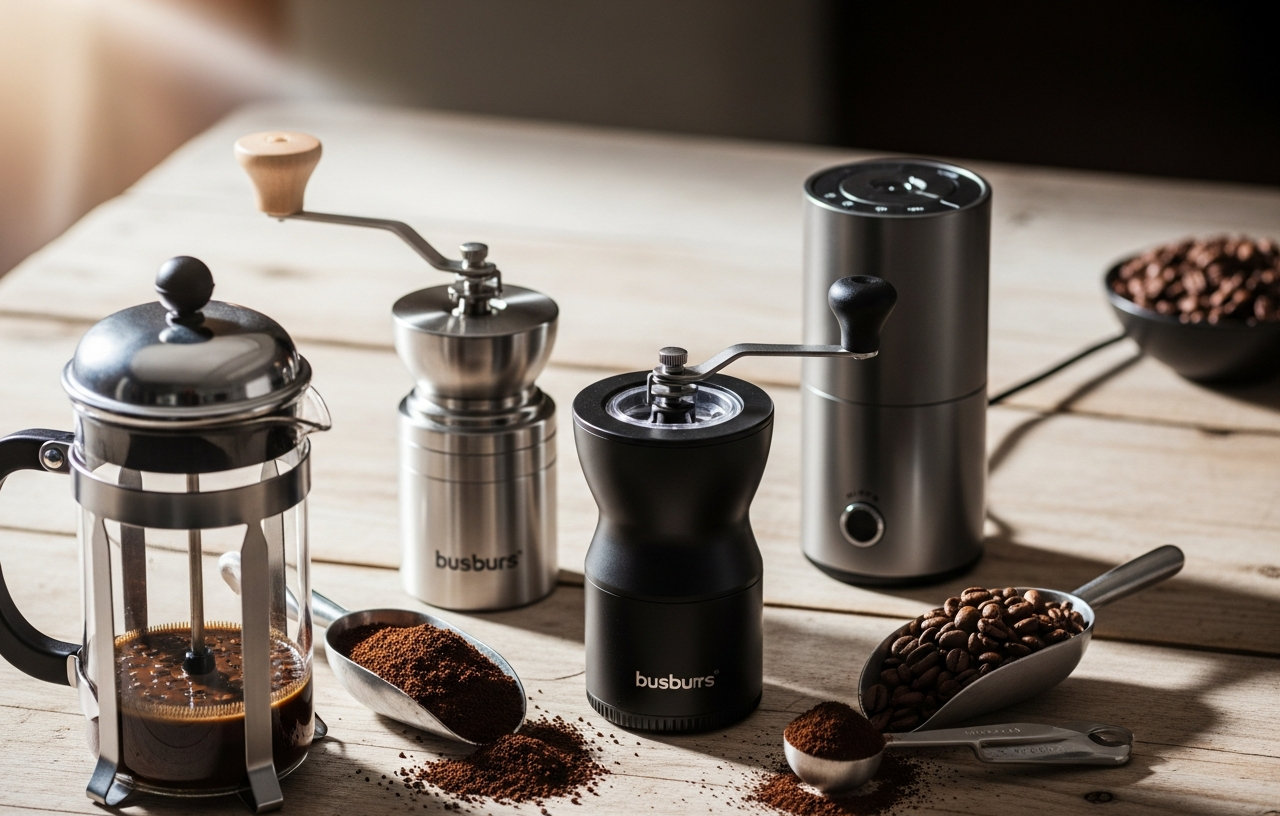
Understanding Inconsistent Grinds: Why Uniformity Matters
A coffee grinder making an inconsistent grind, producing a mix of fine dust and coarse chunks, directly impacts your coffee's flavor. This uneven particle size leads to uneven extraction. Finer particles overextract quickly, creating bitterness, while coarser particles underextract, resulting in sourness and a weak body. Your coffee will taste unbalanced, regardless of the bean quality or brewing method.
The primary function of a burr grinder is to break coffee beans into uniformly sized particles. When this uniformity fails, it signals a problem within the grinding mechanism. There are three main reasons a grinder might start performing poorly: clogged burrs, worn burrs, or internal misalignment or damage. Identifying the correct cause is the first step toward restoring your grinder's performance and, by extension, your coffee quality.
Cause 1: Clogged Burrs and Coffee Residue Buildup
How to Identify Clogged Burrs
Old coffee grounds and oils accumulate on grinder burrs over time. This sticky residue dulls the burrs' cutting edges and fills the gaps between them, preventing the beans from being processed uniformly. The grinder struggles to pull beans through, leading to uneven grinding, a slower grind time, and sometimes a change in the motor's sound.
To check for clogged burrs, unplug your grinder. Remove the hopper and the top burr. Most home grinders allow the top burr to be twisted or unlatched and lifted out. Visually inspect both the top and bottom burrs. Look for caked-on coffee oils, fine dust, and any small bean fragments stuck in the teeth or grooves. If you see a thick layer of dark, oily residue, your burrs are likely clogged.
The Quick Fix: Cleaning Your Grinder
Regular cleaning is often the simplest and most effective solution for inconsistent grinds caused by buildup. For light cleaning, you can use specialized grinder cleaning tablets that absorb oils and dislodge old grounds. For a deeper clean, physical brushing is necessary.
Use a stiff brush to meticulously remove all visible residue from both burrs and the grinding chamber. Pay close attention to the grooves and edges of the burrs. A vacuum cleaner with a narrow attachment can help remove loose grounds from hard-to-reach areas. Make sure all parts are completely dry before reassembling.
A dedicated coffee grinder cleaning brush set makes this task much easier. The right tools feature natural bristles, which are stiff enough to dislodge stubborn coffee grounds without damaging the burrs. A comfortable, ergonomic handle also helps.
Recommended Cleaning Tools
The Coffee Grinder Cleaning Brush Set, Espresso Machine Brush Cleaner Tool with Walnut Wood Handle and Natural Bristles for Barista is a top choice for maintaining grinder hygiene. This set includes brushes specifically designed to reach into the crevices of your grinder. The natural bristles are effective at sweeping away coffee grounds and oils. Its walnut wood handle offers a comfortable and secure grip during cleaning.

- : This coffee grinder brush set is specially designed to brush away coffee grounds for the coffee grinder.
- : This coffee grinder cleaning brush is made of natural bristles, which are stiffer and brush away coffee.
- : The handle is made of solid walnut wood with fine polishing, it is comfortable to grip. The handle and.
- : There is a little hanging strap on the end, so you can hang it. This design makes it very convenient for.
Another excellent option is the MIGAKU HOME Coffee Grinder Cleaning Kit. This comprehensive 5-piece set includes a large soft walnut brush for sweeping loose grounds, a small hard walnut brush for targeted cleaning of burrs, an espresso group head brush, a long-reach brush, and an air blower. This kit addresses various cleaning needs for your grinder and espresso setup, making sure all areas are accessible.

- 5Pcs Espresso Cleaning Kit: MIGAKU HOME set includes Black Walnut Large Soft Brush, Black Walnut Small.
- Targeted Cleaning with Walnut Brushes: Large soft walnut brush sweeps loose grounds; small hard walnut.
- Hard-to-Reach Area Cleaning: Espresso Group Head Brush cleans espresso machine group heads. Long-reach.
- Premium Black Walnut Craftsmanship: 2 main brushes made of natural black walnut wood, blends perfectly.
For a basic yet effective tool, consider the Acooruiteng Coffee Grinder Cleaning Brush Dusting Espresso Brush Accessories Cleaner Barista Brush Machine Cleaning Brush. This brush is made of high quality aluminum and fiber wool, providing a balance of stiffness and softness. It is well-suited for regular dusting and light cleaning of your grinder's burrs and chamber.

- 🧹【Package Included】The package contains 1 pcs dusting coffee grinder brush,the size is about 13cm ×.
- 🧹【High Quality Material】Coffee grinder cleaning brush is made of high quality aluminum + fiber wool,a well.
- 🧹【Soft Brush Hair】Coffee brush gives not too stiff or too soft,have just the right pliancy for a good.
- 🧹【Easy to Clean】Barista brush can hand wash in warm water using a mild dish detergent,clean conveniently.
A thorough cleaning can often restore grind consistency. If you grind very oily beans, you might need to clean your grinder more frequently, perhaps every week or two, to prevent buildup. For a quick clean without full disassembly, there are also methods available. Quick Coffee Grinder Cleaning: No Disassembly Required
Cause 2: Worn Burrs
Recognizing Worn Burrs
Coffee grinder burrs, whether conical or flat, are cutting tools. Over thousands of grinding cycles, their sharp edges slowly dull, much like a knife. Dull burrs don't cut beans cleanly; instead, they smash and tear them, leading to a much wider range of particle sizes. This is a common issue in grinders that have seen extensive use, typically after several years of daily operation.
A tell-tale sign of worn burrs, beyond inconsistent grind, is needing to set your grinder to a finer setting than usual to achieve the same particle size you once did. For instance, if you used to grind for espresso at setting '4' and now need '2' to get a similar flow rate, your burrs are likely losing their sharpness. Another indicator can be increased static electricity when grinding, as dull burrs generate more friction.
Testing for Worn Burrs
To confirm worn burrs, unplug the grinder and remove the hopper and top burr as you would for cleaning. Carefully inspect the cutting edges of both burrs. New burrs have distinct, sharp edges. Worn burrs will appear rounded, flattened, or smooth in areas. You might also notice shiny spots where the metal has been worn down. Run your finger (carefully) over the edges; if they feel dull rather than sharp, replacement is likely needed.
Solution: Burr Replacement
If your burrs are significantly worn, cleaning will not solve the problem. You will need to replace them. Many grinder manufacturers sell replacement burr sets. The cost for replacement burrs can range from approximately $20 to $100, depending on the grinder model and brand. high end grinders might have more expensive burr sets, while entry-level models are often on the lower end of this range.
Refer to your grinder's user manual for specific instructions. Generally, it involves removing the old burrs and carefully installing the new ones, making sure they are seated correctly. This repair can significantly extend the life of your grinder and restore its grinding performance to like-new condition.
Understanding the distinction between burr grinders and blade grinders is important for grind quality. Burr Grinder vs Blade Grinder: Which One Makes Better Coffee?
Cause 3: Misalignment or Damage to Grinding Mechanism
Diagnosing Mechanical Issues
While less common than clogged or worn burrs, internal damage or misalignment can also cause inconsistent grinding. This might include issues with the burr carrier, motor, or other components that keep the burrs properly spaced and aligned during operation. Such problems often manifest as unusual noises, vibrations, or visible wobbling of the burrs.
Listen carefully to your grinder while it operates. Does it make a new clicking, grinding, or scraping sound that wasn't there before? Does the motor sound strained, even with a small amount of beans? These auditory cues can indicate a mechanical problem. Visually, after removing the top burr, gently try to wiggle the bottom burr. There should be minimal play. Excessive movement might suggest a loose or damaged burr carrier.
Potential Problems and Costs
- Loose or Damaged Burr Carrier: The burrs are held in place by a carrier mechanism. If this mechanism becomes loose, cracked, or warped, the burrs will not maintain a consistent distance, leading to uneven grinding. This can happen from dropping the grinder, or from a foreign object (like a pebble) getting into the burrs. Replacing a burr carrier can cost anywhere from $30 to $80, plus labor if you cannot do it yourself.
- Foreign Object in Grinder: Sometimes a small stone, metal shard, or other foreign object can get mixed in with coffee beans. Grinding these objects can damage the burrs, the motor, or the burr carrier, leading to immediate inconsistencies and potentially loud, alarming noises. If you suspect a foreign object, unplug the grinder immediately and inspect the burrs. Remove any obstruction carefully. If damage occurred, burr or carrier replacement might be necessary.
- Motor or Gearbox Issues: In rare cases, the motor or gearbox itself might be failing, leading to inconsistent burr rotation speed or torque. This can result in uneven grinding, especially under load. This is a more serious repair, often requiring professional service. Motor or gearbox replacement can be expensive, potentially ranging from $100 to $250 or more, sometimes making it more cost effective to replace the entire grinder, particularly for entry-level models.
Testing and Repair Steps
If you suspect a mechanical issue, first clean the grinder thoroughly as described above. Sometimes, a stubborn clog can mimic other problems. If the problem persists, carefully inspect for physical damage to the burrs or their housing. If you find a loose screw or a visibly misaligned component, and are comfortable with minor repairs, you might be able to tighten or adjust it following your manual.
For more complex issues like a damaged burr carrier or motor problems, contacting the manufacturer's customer support is often the best course of action. They can advise on warranty coverage, available replacement parts, or authorized service centers. For grinders under warranty, this could mean a free repair or replacement. For older, less expensive grinders, the cost of professional repair might exceed the value of the grinder itself.
Preventing Inconsistent Grinds and Maintaining Your Grinder
Proactive maintenance is the best way to avoid inconsistent grinding. Here are a few tips:
- Regular Cleaning: Establish a cleaning routine. A quick brush-out after every few uses and a deeper clean monthly will prevent buildup. Use appropriate cleaning tools like the brushes mentioned earlier.
- Use Quality Beans: Freshly roasted, good quality beans generally have less chaff and fewer foreign objects, reducing the risk of clogging or damage.
- Avoid Overloading: Do not fill your hopper to the brim if you only need a small amount of coffee. Grind only what you need to reduce stale grounds sitting in the grinder and minimize strain on the motor.
- Listen to Your Grinder: Pay attention to changes in sound or performance. Unusual noises are often the first sign of a problem developing.
- Check Burrs Periodically: Every few months, take a moment to inspect your burrs for signs of wear. Early detection of dulling can help you plan for replacement before grind quality severely degrades.
Maintaining your coffee grinder properly not only ensures consistent, delicious coffee but also extends the life of your valuable equipment. A small investment in time for cleaning and inspection pays off with every cup.