The Appeal of Homemade Cold Brew Coffee
Cold brew coffee offers a distinctively smooth and less acidic profile compared to its hot-brewed counterparts. This characteristic makes it a favorite for many, especially those with sensitive stomachs or who simply prefer a mellow coffee flavor. The brewing process itself is remarkably simple, requiring minimal active time and basic equipment. Mastering how to make cold brew coffee at home opens the door to significant cost savings over purchasing it from cafes and allows for complete control over the beans and strength.
The primary difference lies in the brewing method. Hot brewing extracts oils and acids rapidly. Cold brewing, conversely, uses time instead of heat. This extended contact between water and coffee grounds over many hours gently releases flavors and compounds, leading to that signature smoothness and reduced bitterness. Understanding how to do cold brew coffee is less about complex techniques and more about patience and proper ratios.
What You Need: Cold Brew Coffee Essentials
Brewing cold brew coffee at home doesn't require specialized, expensive machinery. You can achieve excellent results with common kitchen items. The core components are simple:
- Coffee Beans: Use your favorite whole beans. Medium to dark roasts often shine in cold brew, but experiment to find your preference.
- Grinder: A burr grinder is highly recommended for a consistent, coarse grind. Blade grinders can produce an uneven grind, leading to bitterness or weak brew.
- Water: Filtered water is best for a clean taste.
- Container: A large jar, pitcher, or French press works well for the initial steeping. Options include:
- A fine-mesh sieve lined with cheesecloth.
- A dedicated cold brew maker with a built-in filter.
- A French press (the built-in filter works, though a secondary strain might improve clarity).
- Storage Container: An airtight bottle or jar for your finished concentrate.
The investment in a good grinder will pay dividends not only for cold brew but for all your coffee brewing methods. A consistent grind size is perhaps the single most important factor after bean quality.
step by step: How to Make Cold Brew Coffee
Follow these steps to brew your perfect batch of cold brew coffee.
Step 1: Grind Your Coffee
Measure your whole coffee beans. For a standard 1:4 coffee to water ratio, aiming for a 16 oz batch of concentrate, you'll need about 2 cups (around 200-225 grams) of whole beans. Grind them to a coarse consistency, similar to breadcrumbs or coarse sea salt. A fine grind will pass through your filter, creating sediment and potentially over-extracting the coffee, leading to bitterness. A grind that’s too coarse might result in a weak brew.
Step 2: Combine Coffee and Water
Place your coarsely ground coffee into your steeping container. Slowly pour cold or room temperature filtered water over the grounds. You can use a 1:4 ratio for a strong concentrate (e.g., 2 cups of grounds to 8 cups of water), or a 1:8 ratio for a less concentrated brew that requires less dilution later. Stir gently to ensure all grounds are saturated. Don't over-stir; just make sure there are no dry pockets of coffee.
The ratio is flexible and depends on your preference. Many find a 1:5 ratio to be a good balance for a strong yet manageable concentrate. If you're unsure how to make cold brew coffee, starting with 1:5 and adjusting future batches is a solid approach. Remember, this initial liquid is a concentrate, meant to be diluted.
Step 3: Steep the Coffee
Cover your container tightly and let it steep at room temperature or in the refrigerator. The steeping time is critical. For most roasts and desired strengths, 12 to 18 hours is a good starting point. Longer steeping, up to 24 hours, will yield a stronger, more intense concentrate. Shorter times, under 12 hours, might result in a weaker, less flavorful brew. Experimentation is key here to find your personal sweet spot.
Safety Warning: While cold brewing is generally safe, always use clean equipment and fresh beans. If your brew develops any off-smells or mold, discard it immediately. Room temperature steeping is common, but refrigerating during steeping can slightly alter the flavor profile and offers an added layer of food safety.
Step 4: Strain the Cold Brew
This is where you separate the liquid gold from the spent grounds. If using a sieve and cheesecloth, place the sieve over another clean container or pitcher, line it with a few layers of cheesecloth, and slowly pour the coffee mixture through it. Let gravity do the work; avoid pressing down on the grounds, as this can push bitter compounds and fine sediment into your brew. You may need to strain it twice for maximum clarity.
If you're using a dedicated cold brew maker, follow the manufacturer's instructions. Most involve simply lifting the filter basket out of the pitcher. A French press requires you to slowly press the plunger down, then pour the coffee through a fine-mesh sieve for best results. The goal is a clear, sediment-free liquid.
Consider the VA1KENE Cold Brew Coffee Maker. Its included stainless steel filter is designed for fine mesh, aiming to reduce sediment. The pitcher design also facilitates easy pouring and storage.

- Package Includes: 2 x Cold Brew Coffee Jars, 2 x Stainless Steel Filters, and 2 x Cleaning Brushes
- Leak-Proof Design: The VA1KENE Cold Brew Coffee Maker features a secure, leak-proof lid, ensuring your.
- Stainless Steel Fine Mesh Filter: Equipped with a high quality stainless steel filter, this cold brew.
- Ergonomic Handle: The ergonomic handle provides a comfortable, non-slip grip, making it easy to pour.
The OVALWARE Airtight Cold Brew Pitcher is another option, featuring a spout for easy pouring and an airtight seal to preserve freshness. Its 1.5L capacity is suitable for smaller households.
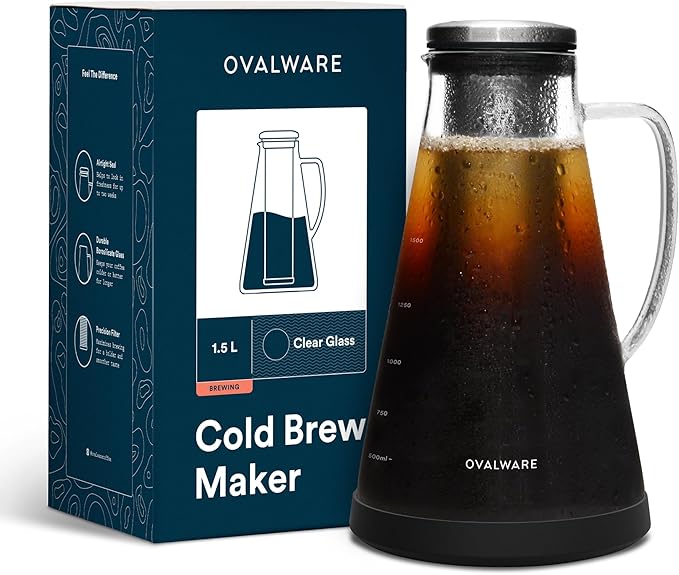
- HEALTHIER & SMOOTHER COFFEE, NOW BIGGER AND BETTER to Cold brewing is 70% less acidic than hot brewing. And.
- LOCKS IN FRESHNESS AND FLAVOR FOR UP TO 2 WEEKS to Airtight seal. Easy-access handle. Engineered to.
- QUALITY YOU WON’T REGRET to 18/8 rust-free superfine laser cut filter, medical-grade stainless steel filter.
- ICED AND HOT TEA COMPATIBLE to Great for loose-leaf tea. Or tea bags. Brew it hot like a traditional.
For those who prefer a larger capacity, the JunVpic Cold Brew Coffee Maker Jar offers 64oz of brewing space in a heavy duty glass pitcher with a spout and handle, paired with a 304 stainless steel filter.

- Heavy Duty Glass Pitcher: Crafted from high quality, food-grade soda-lime glass with a thickness of.
- Ultra-Fine Mesh Filter:Made from premium 304 stainless steel with a 100 micron weave, this filter ensures.
- Sturdy Sealing: Our liquid pitcher features a sturdy sealing system to keep your drinks fresh and prevent.
- Easy to Clean:Cleaning the wide mouth jar is quick and easy. Simply put some mild soapy water into the.
Step 5: Dilute and Serve
Your cold brew is now a concentrate. It's too strong to drink as is. Dilute it with water, milk, or your preferred non-dairy alternative. A common starting point is a 1:1 ratio of concentrate to liquid, but adjust to your taste. If it's too strong, add more liquid; if it's too weak, you know for next time to use more coffee or steep longer.
Serve over ice. You can sweeten it with simple syrup, honey, or your preferred sweetener. Add a splash of cream or milk for a richer texture. Cold brew concentrate remains fresh in an airtight container in the refrigerator for up to two weeks.
Troubleshooting Common Cold Brew Issues
Even with simple methods, you might encounter a few snags. Here’s how to address them:
My cold brew is too bitter.
Bitterness in cold brew is usually due to over-extraction. This can happen if your grind is too fine, your steeping time is too long (over 24 hours), or if you press or agitate the grounds too much during straining. Try using a coarser grind, reducing steeping time by a couple of hours, and being gentler when you strain.
My cold brew is too weak.
A weak brew suggests under-extraction. This can occur with too coarse a grind, too short a steeping time (under 12 hours), or an insufficient coffee-to-water ratio. Increase the amount of coffee grounds, extend the steeping time, or ensure your grind is not excessively coarse.
My cold brew has too much sediment.
Sediment is almost always a result of a grind that is too fine, or inadequate straining. Ensure you are using a coarse grind. If using a sieve, line it with a coffee filter or a double layer of cheesecloth. Pour slowly and avoid disturbing the grounds at the bottom of the steeping container.
Cold Brew Variations
Once you've mastered the basic how-to make cold brew coffee, consider these variations:
- Cold Brew Concentrate: The standard method described above.
- Ready-to-Drink Cold Brew: Use a lower coffee-to-water ratio (e.g., 1:10 or 1:12) and a longer steep time (closer to 24 hours). This produces a brew that requires little to no dilution.
- Cold Brew Tea: The same principles apply to tea leaves. Steep your favorite tea in cold water for 6-12 hours for a smooth, refreshing iced tea.
- Infused Cold Brew: Add spices like cinnamon sticks, star anise, or cardamom pods to the grounds before steeping for added flavor complexity.
The adaptability of cold brew means you can tailor it precisely to your liking. This flexibility is a major reason why learning how to make cold brew coffee at home is so rewarding.
Conclusion: Enjoy Your Homemade Cold Brew
Making cold brew coffee at home is an accessible and rewarding process. It requires patience more than anything else. By understanding the interplay of grind size, water ratio, and steeping time, you can consistently produce a smooth, low-acid, and delicious coffee concentrate. Whether you prefer it black, with milk, or as a base for coffee cocktails, homemade cold brew is a fantastic addition to your coffee repertoire. Experiment with different beans and ratios to find your ultimate cup.