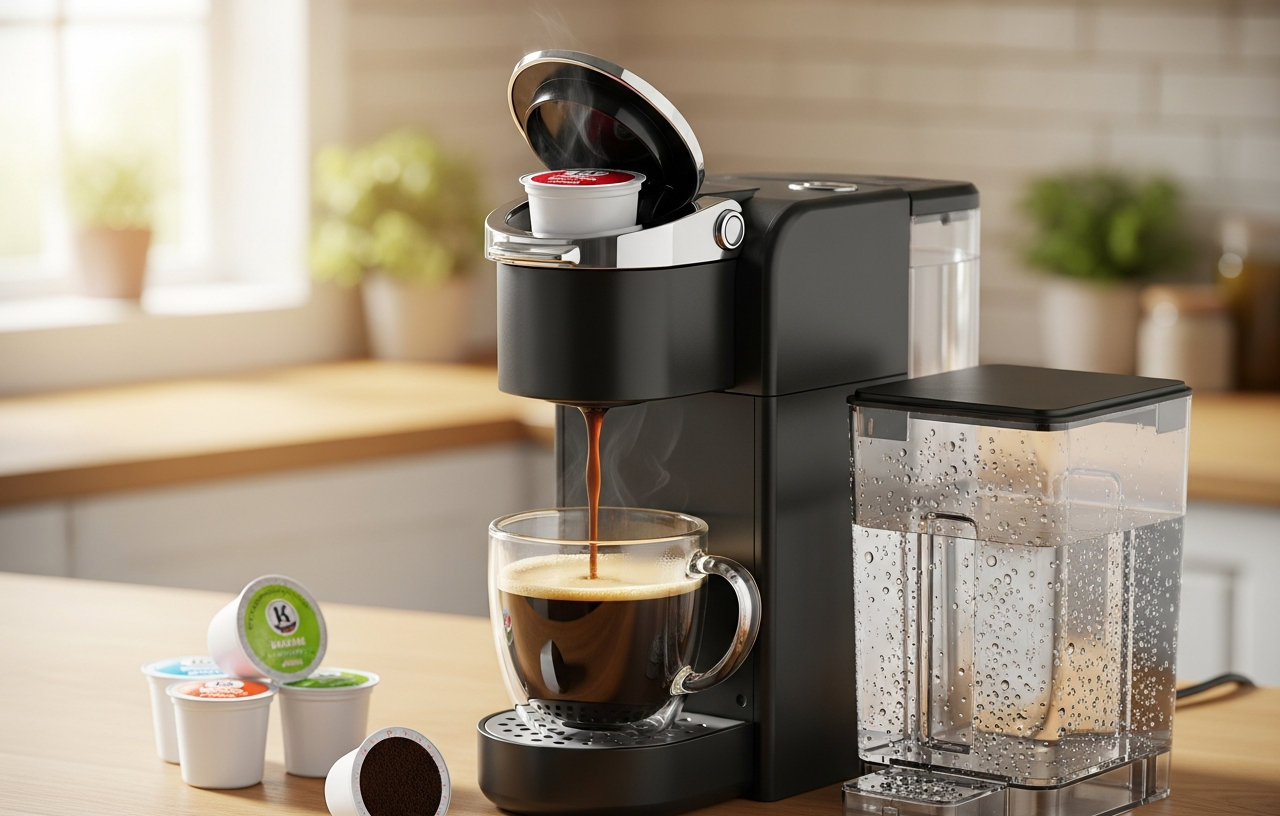
The fundamental operation of single serve coffee makers involves forcing hot water through a pre-packaged coffee pod under pressure. This process, while seemingly simple, relies on several interconnected components to consistently deliver a single cup of coffee, typically within 60 seconds. Understanding these mechanisms helps explain the convenience and limitations of these popular machines.
The Core Mechanism of Single Serve Coffee Makers
Single serve coffee makers are designed for efficiency and convenience, transforming a sealed pod into a fresh cup of coffee quickly. The process begins with water heating, followed by pressurized injection into the coffee pod. Most systems operate at specific temperatures and pressures to achieve optimal extraction for their designated pod type.
Water Heating and Pressure Generation
Water from the reservoir is drawn into a heating element, often a thermoblock, where it rapidly reaches the ideal brewing temperature. For standard coffee, this temperature usually falls between 195°F and 205°F (90°C and 96°C). Espresso-style pods, like those from Nespresso, require similar temperatures but significantly higher pressure.
A vibratory pump, a common component in home coffee machines, then generates the necessary pressure. For drip-style single serve systems, like Keurig, pump pressure is typically lower, around 2-4 bars, sufficient to push water through the loosely packed coffee grounds in a K-Cup. Espresso-focused machines, such as Nespresso, use pumps capable of 9 to 19 bars of pressure. This higher pressure is essential for creating the crema and extracting the concentrated flavor associated with espresso.
Pod Interaction and Extraction
Once hot water reaches the pod holder, a mechanism pierces the pod's foil lid or top surface. Simultaneously, water is injected into the pod. The design of the pod itself plays a significant role in extraction. K-Cups, for example, have a filter lining and a specific internal structure that guides water flow through the ground coffee. Nespresso pods use a different system. Their aluminum capsules are pierced at both ends, allowing high-pressure water to saturate the fine grounds and exit through a perforated foil base, creating espresso.
ESE (Easy Serving Espresso) pods, another type of single serve option, are essentially pre-portioned, tamped coffee grounds encased in filter paper. These pods are placed into a specific portafilter designed to hold them, and hot water is forced through, similar to a traditional espresso shot. The consistency in grinding and tamping within these pods helps ensure repeatable results, even with lower-end espresso machines.
Key Components and Their Functions
Each single serve coffee maker, regardless of brand, contains several core components working in concert to produce your beverage. Understanding these parts clarifies their operation and potential points of maintenance.
Water Reservoir
The water reservoir holds the water used for brewing. Capacities vary widely, from small 10-ounce tanks suitable for one or two cups to larger 60-ounce or more reservoirs that can brew several servings before needing a refill. Many reservoirs are removable for easy filling and cleaning. Some models include a water filter, which can reduce mineral buildup and improve coffee taste by removing chlorine and other impurities.
Heating Element or Thermoblock
This component is responsible for rapidly heating the water to the optimal brewing temperature. Simpler machines might use a basic heating element, while higher-end models often use a thermoblock. A thermoblock heats water on demand as it passes through a coiled metal tube, offering faster heat-up times and better temperature stability compared to traditional boiler systems. Consistent water temperature, typically between 195°F and 205°F (90-96°C), is vital for proper coffee extraction.
Water Pump
The water pump provides the necessary pressure to push hot water through the coffee grounds. Most home single serve machines use vibratory pumps, which are compact and cost effective. These pumps create pressure by vibrating a piston, forcing water forward. As mentioned, the required pressure varies significantly: 2-4 bars for drip coffee, and 9-19 bars for espresso-style drinks.
Pod Holder and Brew Chamber
This is where the coffee pod is inserted and secured. The design includes mechanisms to pierce the pod and create a sealed chamber, preventing water from leaking out during the high-pressure brewing process. For K-Cups, this involves a needle piercing the top and a series of smaller needles or a grid at the bottom to allow coffee to exit. Nespresso machines use a clamping mechanism and multiple piercing points. The integrity of this seal is critical; a worn seal can lead to leaks or inefficient extraction.
Dispensing Nozzle
After brewing, the extracted coffee flows through the dispensing nozzle into your cup. The design of this nozzle can influence the flow rate and how the coffee pours. Some machines feature adjustable nozzles to accommodate different cup sizes, preventing splashes and ensuring a clean pour.
Drip Tray
Located beneath the dispensing nozzle, the drip tray collects any drips or spills. Most are removable for easy emptying and cleaning. A full drip tray can indicate a need for maintenance or that the machine is not properly draining excess water after a brew cycle.
Control Panel
The control panel provides the user interface for operating the machine. This can range from simple buttons for power and brew size selection to more advanced touchscreens with custom settings. Common options include selecting different cup sizes (e.g., 6 oz, 8 oz, 10 oz) or adjusting brew strength. Some machines also feature dedicated buttons for rinsing or descaling cycles.
Drip Coffee Maker vs. Pour Over: Understanding the Differences
Brewing Process step by step
A typical single serve brewing cycle follows a predictable sequence, designed for speed and simplicity.
- Fill Water Reservoir: The user fills the machine's water reservoir with fresh, cold water.
- Insert Coffee Pod: The chosen coffee pod is placed into the designated pod holder or brew chamber, ensuring it is correctly seated and the lid is closed securely.
- Select Brew Size: Using the control panel, the user selects the desired cup size or brew strength.
- Heating Cycle: The machine initiates its heating element, quickly bringing the water to the optimal brewing temperature, usually within 15-45 seconds.
- Water Pump Activation: Once the water is hot, the pump activates, drawing water from the reservoir and forcing it through the heating element.
- Brewing and Dispensing: The hot, pressurized water is injected into the coffee pod, saturating the grounds. The extracted coffee then flows out of the pod and through the dispensing nozzle directly into the cup.
- Used Pod Ejection (Optional): Some machines automatically eject the used pod into an internal waste bin, while others require manual removal.
The entire process, from pressing the brew button to a full cup, typically takes between 30 seconds and 2 minutes, depending on the machine and selected brew size.
Advantages and Disadvantages of Single Serve Systems
Single serve coffee makers offer distinct benefits, but they also come with specific drawbacks that potential users should consider.
Advantages
- Convenience and Speed: The primary appeal is the ease of use. A fresh cup of coffee is available with minimal effort and cleanup, often in under a minute. There is no need to measure coffee grounds or use separate filters.
- Variety: The market offers a vast selection of coffee, tea, and other beverage pods from numerous brands. This allows users to explore different flavors without committing to a large bag of beans.
- Minimal Cleanup: Since the coffee is contained within the pod, cleanup is usually limited to discarding the used pod and occasionally wiping the machine's exterior.
- Portion Control: Each pod contains a pre-measured amount of coffee, ensuring consistent strength and flavor for single servings. This also reduces waste compared to brewing a full pot that might not be entirely consumed.
Disadvantages
- Cost Per Cup: Single serve pods are generally more expensive per ounce of coffee than buying ground coffee or whole beans. A single K-Cup can cost between $0.50 and $1.00, while a serving of ground coffee brewed in a drip machine might cost $0.15 to $0.30. This difference accumulates over time.
- Environmental Impact: The vast majority of coffee pods are single-use plastic or aluminum, contributing to landfill waste. While some brands offer recyclable or compostable options, widespread adoption and proper disposal remain challenges.
- Limited Customization: Users have less control over variables like grind size, water temperature, or extraction time compared to traditional brewing methods. This can limit the ability to fine-tune flavor profiles.
- Potential for Stale Coffee: While pods are sealed, the coffee inside is pre-ground. Ground coffee loses freshness much faster than whole beans. Even in sealed pods, the quality might not match freshly ground coffee.
- Maintenance Requirements: Despite perceived simplicity, single serve machines still require regular descaling, especially in areas with hard water. Neglecting this can lead to mineral buildup, reduced performance, and machine failure.
Espresso Machine Dripping Water? Common Causes and Fixes
Maintenance and Longevity
Proper maintenance significantly impacts the performance and lifespan of any single serve coffee maker. Ignoring these steps can lead to mineral buildup, reduced brewing temperature, slower dispensing, and eventual machine malfunction.
Regular Descaling
Descaling is arguably the most critical maintenance task. Over time, minerals present in tap water, particularly calcium and magnesium, accumulate within the machine's heating element and water lines. This mineral buildup, known as scale, can restrict water flow, lower brewing temperatures, and eventually clog the machine. Most manufacturers recommend descaling every 3 to 6 months, or more frequently if you have hard water or use the machine daily. Descaling solutions, typically a mixture of citric acid or lactic acid, are run through the machine's brewing cycle to dissolve these deposits.
Cleaning the Pod Holder and Dispensing Nozzle
Coffee oils and residue can accumulate in the pod holder, around the piercing needles, and within the dispensing nozzle. This buildup can affect the taste of your coffee and potentially clog the machine. Regular rinsing or wiping of these components, usually weekly, helps prevent this. Some machines have a specific "rinse" cycle that flushes clean water through the system.
Water Filter Replacement
If your single serve machine includes a water filter in the reservoir, replace it according to the manufacturer's recommendations, typically every 1-2 months. These filters help reduce chlorine and sediment, improving water quality and extending the time between descaling cycles by reducing mineral content. Ignoring filter replacement can lead to poorer coffee taste and increased scale buildup.
Impact of Neglect
Neglecting maintenance, especially descaling, can lead to several common issues. A machine might start brewing coffee that is lukewarm, indicating a scaled-up heating element. The pump might struggle to push water through, resulting in slower brew times or incomplete extraction. In severe cases, mineral blockages can cause the pump to overheat and fail, or the machine to stop working entirely. Adhering to the maintenance schedule ensures consistent performance and protects your investment.