A moka pot relies on steam pressure to force hot water through coffee grounds, creating a strong brew. When this system leaks, pressure escapes, leading to under-extracted, weak coffee and a messy stovetop. A common observation is water or steam escaping from the joint between the upper and lower chambers, indicating a failure in the seal. Addressing these leaks promptly ensures proper brewing and extends the life of your coffee maker.
Worn or Damaged Gasket
The rubber gasket, located between the upper and lower chambers, is the most frequent cause of moka pot leaks. Over time, heat, pressure, and repeated use cause the gasket material to harden, crack, or lose its elasticity. This prevents it from forming a tight seal, allowing steam and water to escape during the brewing process. Visually inspect your gasket for any signs of wear, such as flattening, discoloration, cracks, or brittleness. A healthy gasket should be pliable and fit snugly.
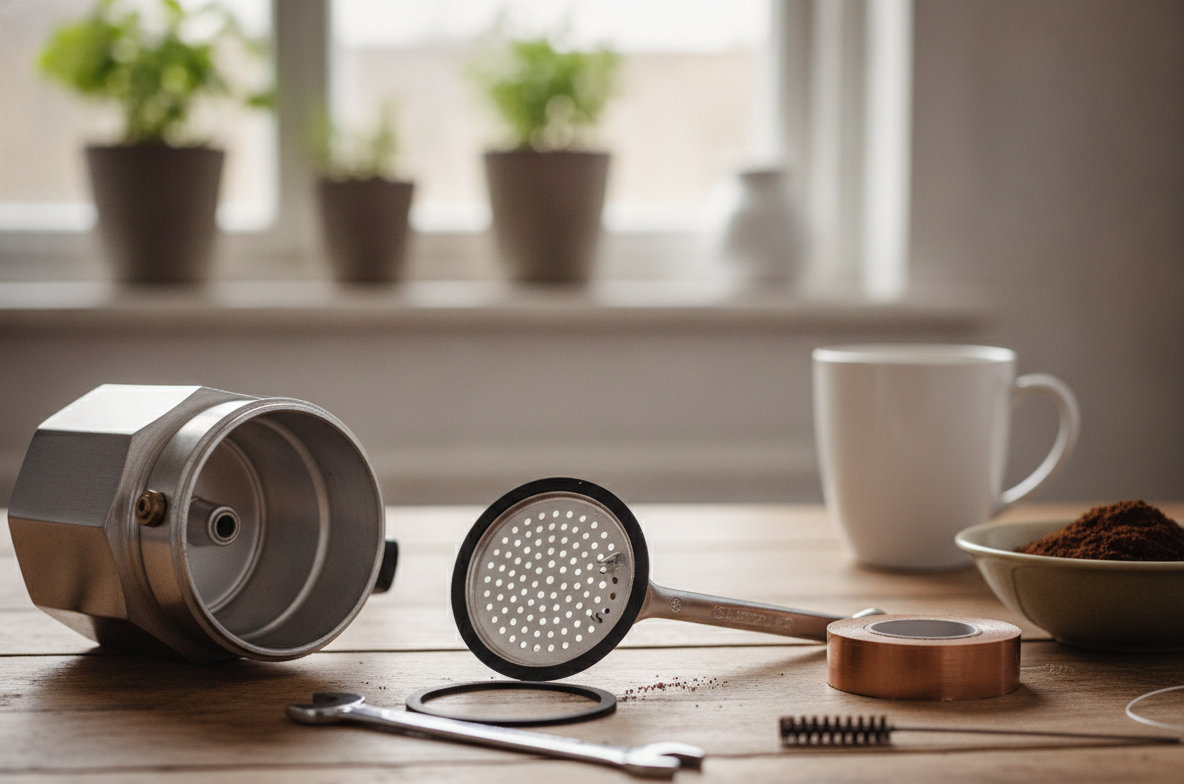
Replacing a worn gasket is a simple and inexpensive repair. New gaskets typically cost between $5 and $15 for a pack of three. To replace it, simply remove the old gasket and the metal filter plate. Clean the rim of the lower chamber and the underside of the upper chamber thoroughly to remove any coffee residue. Insert the new gasket into its groove on the underside of the upper chamber, ensuring it sits flat and evenly. Then, place the filter plate back on top of the gasket.
Finding the Right Gasket Size
Moka pots come in various sizes, and gaskets are not universally interchangeable. You need to match the gasket size to your specific moka pot. The easiest way to do this is to measure the outer diameter of your old gasket. Alternatively, check the capacity (e.g., 3-cup, 6-cup) of your moka pot, as manufacturers often size gaskets by pot capacity.
For many Bialetti Moka Express, Fiammetta, Break, Happy, Dama, and Moka Timer models, a common gasket size has an outer diameter of 72mm. This replacement kit includes three gaskets and one filter plate. Always measure your old gasket to confirm compatibility before purchasing.

- Includes 3 Gaskets and 1 Filter
- Outer Gasket diameter: 72mm / 2,83' Inch
- When in doubt, please measure your old gasket to ensure a proper fit
Another popular size for Bialetti Moka Express, Fiammetta, Break, Happy, Dama, and Moka Melody models features an outer gasket diameter of 65mm. This option also provides three gaskets and a new filter plate. Double-checking your existing gasket's dimensions is important for a proper fit.

- Includes 3 Gaskets and 1 Filter
- Outer Gasket diameter: 65mm / 2,55' Inch
- Please measure your old gasket to ensure a proper fit
For those seeking an alternative to traditional rubber, silicone gaskets offer enhanced durability and flexibility. These food-grade silicone rings are compatible with 6-cup Moka Express Dama and similar aluminum stovetop coffee makers.

- Food Grade Silicone Material:Compatible with 6-cup Moka Express Dama and similar aluminium stovetop coffee.
- Soft Silicone Material:Flexible and wear-resistant, performs better than traditional rubber gaskets
- Effective Leak Prevention:Creates a tight seal to maintain pressure and avoid water or steam leakage
- Easy to Install:Simple replacement for old, cracked or deformed seals without extra tools
Improperly Ground Coffee or Overfilling
The type and amount of coffee grounds significantly impact pressure buildup in a moka pot. If the coffee is ground too finely, it can compact too tightly in the filter basket, creating excessive resistance to water flow. This over-pressurization forces water and steam to find the path of least resistance, often resulting in leaks around the gasket or safety valve. Aim for a medium-fine grind, similar to table salt, which is slightly coarser than espresso grind.
Similarly, overfilling the filter basket with too many coffee grounds can lead to similar pressure issues. When the basket is overfilled, the coffee grounds are pressed against the underside of the filter plate, obstructing water flow and increasing internal pressure. Fill the filter basket level with the rim, without tamping the grounds down. A light tap to settle the grounds is acceptable, but avoid compressing them. If you suspect this is the cause, try reducing the amount of coffee slightly and using a slightly coarser grind.
Loose Assembly or Damaged Threads
A moka pot must be screwed together tightly to create a secure seal between the upper and lower chambers. If the two parts are not fully tightened, there will be gaps where water and steam can escape. After filling the lower chamber with water and the filter basket with coffee, screw the upper chamber onto the lower chamber until it feels snug. Do not overtighten, as this can strip the threads over time.
Damaged or worn threads on either the upper or lower chamber can also prevent a tight seal. Inspect the threads on both parts for any signs of wear, cross-threading, or damage. If the threads are visibly stripped or corroded, the moka pot may not be able to form a secure seal regardless of how tightly it is screwed together. In such cases, repairing stripped threads on aluminum can be difficult and costly, often making replacement of the moka pot a more practical solution. New moka pots typically range from $25 to $70, making thread repair economically unfeasible.
Clogged Filter Plate or Funnel
The filter plate, located beneath the upper chamber, and the funnel, which holds the coffee grounds, can become clogged with fine coffee particles and oil residue over time. A clogged filter plate restricts the flow of brewed coffee into the upper chamber, causing pressure to build up excessively in the lower chamber. This increased pressure can force water and steam out through any weak points, including the gasket seal.
Regular cleaning is essential to prevent clogs. After each use, disassemble your moka pot and rinse all parts thoroughly with warm water. Use a soft brush or sponge to gently scrub away any coffee residue from the filter plate, funnel, and inside the lower chamber. Periodically, you may need to perform a deeper clean by soaking the parts in a solution of warm water and white vinegar (1 part vinegar to 2 parts water) to remove stubborn oil buildup. Make sure to rinse all parts completely before reassembling.
For persistent clogs, a small bottle brush or a toothpick can help dislodge particles from the small holes in the filter plate. If the safety valve on the side of the lower chamber is clogged, it can also lead to dangerous pressure buildup and leaks. Never attempt to brew if the safety valve appears blocked. Cleaning the safety valve can involve running water through it or gently poking a thin wire through the opening.
Cracked or Damaged Moka Pot Body
While less common than gasket issues, a crack in the metal body of either the upper or lower chamber will inevitably lead to leaks. Moka pots are typically made from aluminum or stainless steel. Aluminum pots are more susceptible to cracks from impacts or thermal shock (rapid cooling after heating). Stainless steel pots are generally more durable but can still develop stress cracks over many years of use.
Carefully inspect your moka pot for any hairline cracks, especially around the base of the lower chamber, near the handle attachments, or where the upper chamber screws onto the lower. If you find a crack, particularly in the lower chamber, the moka pot is compromised and cannot be safely used. Brewing with a cracked moka pot can be dangerous due to uncontrolled steam release and potential for hot water to spray out. Unfortunately, repairing a cracked aluminum or stainless steel moka pot is usually not feasible or cost effective for home users. Welding or patching metal in a way that withstands high pressure is a specialized task. In most cases, a cracked moka pot means it is time to replace the unit.
Consider the material of your moka pot. Aluminum is lightweight and heats quickly, but stainless steel is more robust and induction-compatible. Understanding the differences can help in future purchases. Moka Pot Materials Explained: Aluminum vs. Stainless Steel
Incorrect Heat Source or Brewing Technique
The heat source and brewing technique also play a role in preventing leaks. Using excessively high heat can cause the water in the lower chamber to boil too rapidly and create pressure too quickly. This can overwhelm the moka pot's sealing capabilities, leading to leaks and potentially a bitter, burnt coffee taste. Always use a medium-low to medium heat setting. The brewing process should be gradual, taking several minutes for the coffee to start flowing into the upper chamber.
Additionally, removing the moka pot from the heat source too late can exacerbate leaks. Once the coffee begins to gurgle and sputter into the upper chamber, indicating the brewing cycle is nearly complete, remove the pot from the heat. Allowing it to boil dry can damage the gasket and potentially the pot itself. Some users also run the base under cold water immediately after removing it from the stove to halt extraction, which can also help prevent prolonged pressure on the gasket.
When to Call a Professional or Replace Your Moka Pot
For most moka pot issues, a simple gasket replacement or thorough cleaning will resolve leaks. These are DIY repairs that cost less than $20. If you have replaced the gasket, cleaned all parts, ensured proper grind size, and tightened the pot correctly, but the leak persists, consider the age and overall condition of your moka pot. A moka pot that is old, has visible cracks, or significantly stripped threads is likely beyond economical repair.
There are no specialized moka pot repair services that would be cost effective for a home user. The cost of professional labor would far exceed the price of a new moka pot. If you have tried all troubleshooting steps and your moka pot continues to leak, it is time to invest in a new one. A good quality moka pot can last for many years with proper care, but eventually, components wear out.
Conclusion
The most common culprit is a worn gasket, an easy and inexpensive fix. Other issues, such as grind size, assembly, or clogs, also have simple solutions. Regular maintenance, including cleaning and proper assembly, will help prevent leaks and keep your moka pot brewing delicious coffee for years to come. If a crack or severely damaged threads are present, replacement is generally the best course of action for safety and performance.