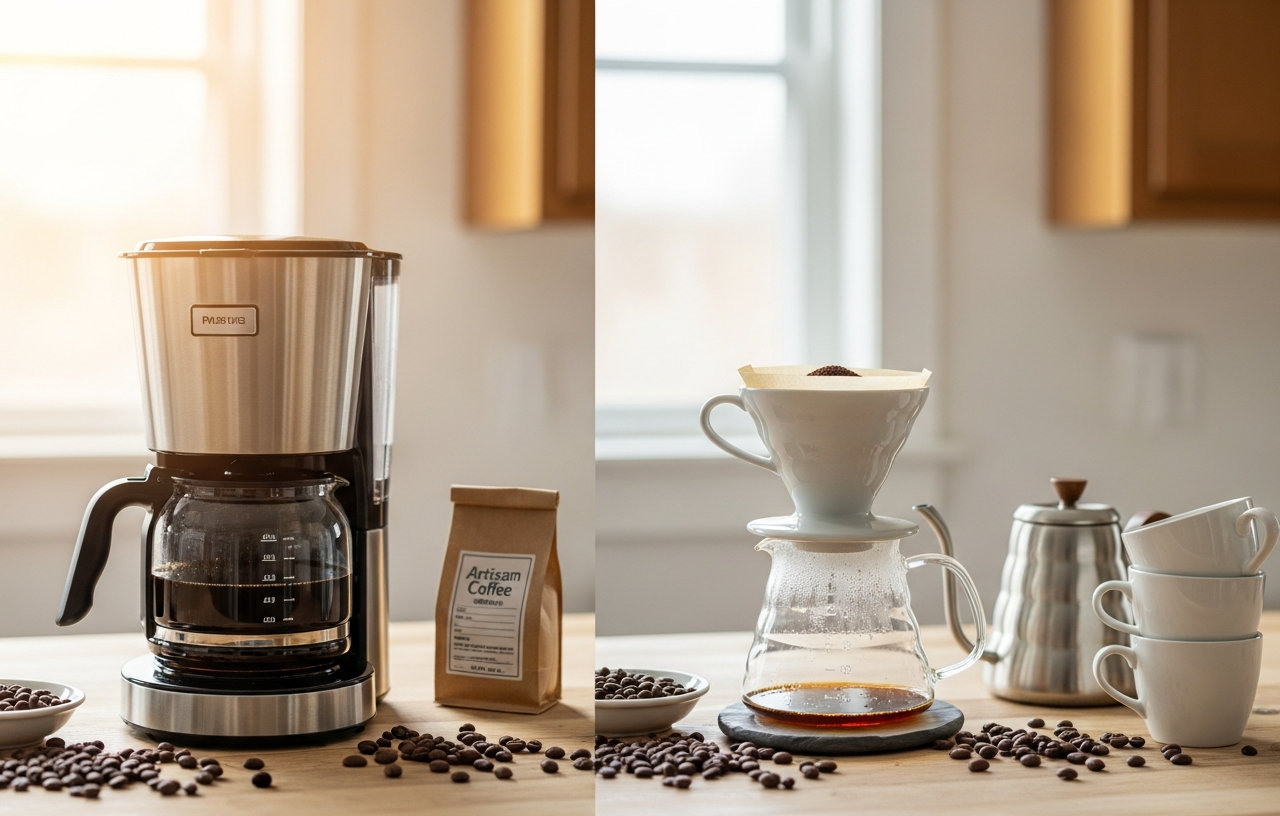
A coffee maker brewing slowly is often a sign of reduced water flow, not necessarily a broken machine. This common issue usually stems from mineral scale buildup, an incorrect coffee grind, or a clogged filter basket. Understanding the underlying cause helps you fix the problem and restore your coffee maker's efficiency. Brewing speed affects coffee taste significantly. When water moves too slowly, it can over-extract the coffee, leading to bitter or harsh flavors.
Identifying the exact reason for sluggish brewing requires a few simple diagnostic steps. Most home coffee makers, from basic drip machines to complex espresso setups, are susceptible to these common problems. Addressing them promptly extends your machine's lifespan and ensures better coffee quality.
Mineral Scale Buildup: The Primary Culprit
The most frequent reason for a slow-brewing coffee maker is mineral scale buildup. This occurs when hard water, rich in calcium and magnesium, is heated and evaporated, leaving behind mineral deposits. Over time, these deposits accumulate in your machine's internal components, including the heating element and water lines. Limescale acts like a blockage, constricting the pathways water travels through. This reduces water flow and drastically slows down the brewing process. It also makes your heating element work harder, potentially leading to higher energy consumption and premature failure.
Diagnosing Limescale
You can often spot limescale by looking for white, chalky deposits around the water reservoir or heating plate. For internal components, the primary diagnostic test is a descaling cycle. If your machine has never been descaled, or if it has been several months, mineral buildup is a strong possibility. Many machines have an indicator light that signals when descaling is needed. Even without a light, if you live in an area with hard water, regular descaling is a must.
The Descaling Process and Solutions
Descaling involves running a specialized cleaning solution through your coffee maker. This solution dissolves the mineral deposits, allowing them to be flushed out. Most manufacturers recommend descaling every 1-3 months, depending on water hardness and usage. Ignoring this maintenance can lead to permanent damage and drastically reduce your machine's performance.
There are many effective descaling products available. The IMPRESA Coffee Descaler, 2-Pack, offers a highly effective, made-in-USA formula designed to clean and rinse away residue and oil buildup. This two-pack provides multiple descaling cycles, preserving your machine by eliminating limescale and mineral buildup. It works with popular brands like Keurig and Nespresso, making it a versatile choice for many home users.

- 2-Pack Coffee Descaler and Cleaner - Clean and rinse away residue and oil buildup in your coffee maker.
- Highly Effective, Made in USA Formula - Unlike most common solutions, our coffee machine cleaner uses just.
- Preserves Your Machine - Using a coffee descaling solution eliminates limescale and mineral build-up to.
- Highly Compatible - Not just for Keurig descaling solution - our coffee maker descaler is also compatible.
Another convenient option is Coffee Machine Cleaner Descaler Tablets. These 24 tablets provide a year's supply or more, offering a cost effective way to maintain your machine. They work with a wide range of brewers, including single-serve K-Cup and pod-style systems, as well as regular coffee pots. These tablets effectively descale hard water buildup, calcium, limescale, grime, and oil.

- Bulk Coffeemaker Decalcifier Tablet: 24 Tablets Work out to a Year Supply or more. Compare to other.
- Wide Brewer Cleaner Compatibility: ACTIVE cleaners work with Single K Cup, Pod Style system and regular.
- Descale and Deep Clean: ACTIVE Descales Hard Water Buildup, Calcium, Limescale, Grime, and Oil in your.
- Enjoy Better Tasting Coffee: Regular Descaling Maintains Temp Stability, Flow, Clarity and Flavor of your.
For those seeking a larger quantity, the ACTIVE Coffee Machine Descaler Descaling Solution comes in a 32oz bottle, providing up to eight uses. This value-sized option reduces waste and offers excellent value. Its descaling and cleaning formula is compatible with all coffee machines, including Nespresso, Keurig, Breville, DeLonghi, Jura, and Ninja models. This solution efficiently removes natural calcium and scale.

- 8 Uses Value-Size Bottle: Same as 4 x 8oz bottle kit of other products! Less Waste, Better Value!
- Works with All Coffee Machines: Our Coffee Maker Descaler is compatible with Nespresso pod and K-cup.
- Descaling and Cleaning Formula: ACTIVE Coffee Descaler and Cleaner, a natural Calcium & Scale Remover.
- Improve Taste of Your Coffee: Our Coffee Maker Cleaner and Descaler is made with coffee-lovers in mind.
Steps for Descaling:
- Empty Reservoir: Make sure your water reservoir is empty.
- Add Descaler: Pour the descaling solution into the reservoir, often diluted with water according to product instructions.
- Run Brew Cycle: Place an empty carafe under the dispenser and run a brew cycle without coffee. The machine will pump the descaling solution through its system.
- Rest: Allow the solution to sit in the machine for 15-30 minutes, or as directed by the descaler's instructions.
- Rinse Cycles: Run two to three full cycles with fresh, clean water to flush out any remaining descaling solution.
The cost of descaling is typically minimal, usually between $10 and $25 for a multi-use bottle or pack of tablets. This small investment prevents much more expensive repairs or premature machine replacement.
Incorrect Coffee Grind Size: A Simple Adjustment
The fineness of your coffee grind significantly impacts brewing speed. If your coffee maker suddenly starts brewing slowly, especially after you've changed your coffee beans or grinder settings, an incorrect grind size is a likely cause. Different brewing methods require different grind sizes. A grind that is too fine will impede water flow, much like a clogged pipe.
Grind Size for Different Methods:
- Drip Coffee Makers: These usually perform best with a medium grind. If your grind is too fine, water struggles to pass through the coffee bed, leading to slow dripping and over-extraction.
- Pour-Over: Similar to drip, pour-over requires a medium to medium-fine grind. Too fine, and the water pools in the cone, slowing extraction significantly.
- Espresso Machines: Espresso requires a very fine grind. However, even for espresso, a grind that is too fine can choke the machine, making it difficult for the pump to push water through the puck. This results in extremely slow extraction, or sometimes no flow at all.
Diagnosing and Adjusting Grind Size
To diagnose, simply examine your coffee grounds. They should feel gritty, like sand, for medium grinds. For espresso, they should feel like powdered sugar but still have some texture. If your grounds resemble flour, they are likely too fine for most brewing methods. You may also notice coffee overflowing the filter basket, indicating water is not draining fast enough.
Adjusting your grinder is the solution. For drip and pour-over, try a slightly coarser setting. For espresso, make very small adjustments to a coarser setting until the flow improves. A good burr grinder allows for precise adjustments, which is key for consistent results. Blade grinders, which chop rather than grind, produce inconsistent particle sizes, often creating a lot of fines that can slow brewing regardless of the overall setting.
Investing in a quality burr grinder can drastically improve your coffee quality and prevent slow brewing issues. Burr Grinder vs Blade Grinder: Which One Makes Better Coffee? explains why burr grinders are superior.
Clogged Filter Basket or Showerhead: Beyond Limescale
Even with regular descaling, other components can become clogged. The filter basket and the showerhead are common areas where coffee oils, fine coffee particles, and even some mineral deposits can accumulate. This buildup restricts water flow and slows down the brewing process. Coffee oils are particularly notorious for leaving sticky residues that trap other particles.
Diagnosing Clogs
Visually inspect your filter basket. Are the tiny holes clear? Hold it up to a light source. If you see blockages, it needs cleaning. For the showerhead (the part that disperses water over the coffee grounds), look for uneven water distribution or reduced flow when running water without coffee. Some showerheads are removable for easier inspection and cleaning.
Cleaning the Components
Cleaning these parts is relatively simple and often requires just hot water, soap, and a brush. For stubborn clogs, a coffee machine cleaner specifically designed to break down coffee oils can be very effective.
- Remove Components: Take out the filter basket and, if possible, the showerhead.
- Soak: Soak the components in a solution of hot water and a mild dish soap or a specialized coffee cleaner. For tough clogs, let them soak for 30 minutes to an hour.
- Scrub: Use a small brush (like an old toothbrush or a pipe cleaner) to scrub away any visible residue from the holes in the filter basket and the showerhead.
- Rinse Thoroughly: Rinse all components thoroughly under hot running water to remove any soap or cleaner residue.
- Reassemble:
The cost for this type of cleaning is usually nothing more than the price of a brush or a bottle of coffee cleaner, typically under $15. Regular cleaning, especially after every brew for the filter basket, prevents these clogs from forming.
Weak Pump or Internal Component Failure (Especially for Espresso Machines)
While less common for standard drip coffee makers, a failing pump or other internal component can cause slow brewing, particularly in espresso machines. Espresso machines rely on a pump to generate the high pressure needed for extraction, typically around 9 bars. If the pump weakens, it cannot deliver sufficient pressure or flow, leading to very slow or inconsistent espresso shots.
Diagnosing Pump Issues
Symptoms of a weak pump include:
- Inconsistent Flow: The water flow might start strong but then slow significantly, or be weak from the beginning.
- Reduced Pressure: If your machine has a pressure gauge, it will read lower than normal during extraction.
- Unusual Noises: The pump might make straining or louder-than-usual noises.
- Water Leaks: Sometimes a failing pump can be associated with internal leaks, though this is not always the case.
This issue is distinct from mineral buildup because descaling will not resolve it. The problem lies with the mechanical integrity of the pump itself. For drip coffee makers, a weak pump usually manifests as very slow dripping, even with clean components and correct grind size.
Solutions and Costs
If you suspect a pump issue, especially with an espresso machine, it often requires professional diagnosis and repair. Home users generally cannot replace a pump themselves, as it involves opening the machine and dealing with electrical and water connections. The cost of pump replacement can range significantly, typically from $100 to $300 or more, depending on the machine model and labor rates. For older or less expensive machines, the cost of repair might approach or exceed the cost of a new machine. In such cases, replacing the entire coffee maker or espresso machine might be a more economical choice.
If you are considering a new espresso machine, our guide to the Best Espresso Machines: A Complete Buying Guide can help.
Preventative Maintenance for Optimal Brewing Speed
Regular maintenance is the best way to prevent slow brewing issues. Establish a routine for your coffee maker based on its type and your usage habits. For most machines, this includes:
- Daily Rinse: Rinse the filter basket and showerhead after every use.
- Weekly Deep Clean: Wash removable components with soap and water.
- Monthly Descaling: For hard water areas, descale at least once a month. For soft water, every 2-3 months might suffice.
- Grinder Check: Regularly check your grinder settings and clean the burrs to ensure consistent grind size.
By staying on top of these simple tasks, you can avoid the frustration of a slow-brewing coffee maker and enjoy consistently delicious coffee.