The Odor of Stale Coffee and Rancid Oils
A persistent, unusual smell from your coffee grinder often signals a problem. The most common culprit is a buildup of old coffee grounds and rancid coffee oils. Coffee beans contain natural oils. These oils are extracted during grinding and can cling to the burrs, blades, and internal surfaces of your grinder. Over time, these residual oils oxidize and become stale, emitting a strong, unpleasant aroma that transfers to your fresh beans.
This smell is usually noticeable even when the grinder is empty. It might be described as musty, acrid, or simply like very old coffee. If you notice a faint, slightly sour smell, especially after grinding a batch of beans, it is likely stale oil.
Quick Test: Visual Inspection and Aroma Check
To confirm this cause, first unplug your grinder. For burr grinders, remove the hopper and the top burr. For blade grinders, remove any accessible parts like the grinding bowl. Inspect the burrs, blades, and internal chambers for a sticky, dark residue. If you can see or feel a greasy film, especially in crevices, this is your primary suspect. Smell these components directly. The odor should be quite evident.
Solution: Deep Cleaning Your Grinder
The solution for stale coffee oils is thorough cleaning. For burr grinders, use a stiff brush or a vacuum cleaner to remove loose grounds. Then, use grinder cleaning tablets, which are food-safe and designed to absorb oils and dislodge fine particles. Run a small amount of these tablets through your grinder, then follow with a handful of cheap rice or an old batch of coffee beans to clear out any residue from the tablets. For blade grinders, you can often remove the grinding bowl for easier washing with warm, soapy water. Always make sure all parts are completely dry before reassembling.
The cost for grinder cleaning tablets typically ranges from $10 to $20 for a container that will last several months. Regular cleaning, ideally once a week for daily users, will prevent this buildup and keep your coffee tasting fresh.
For more detailed cleaning steps, refer to our guide on Quick Coffee Grinder Cleaning: No Disassembly Required.
Burning or Electrical Smells: Motor Overload
A burning smell from your coffee grinder is a more serious concern than stale coffee oils. This odor typically indicates an issue with the motor or electrical components. Grinders use electric motors to power their burrs or blades. When these motors are stressed, they generate excessive heat. If the motor struggles, it can overheat, causing the insulation around the wiring to burn, or even the motor windings themselves to overheat and emit a distinct electrical or burning plastic smell.
This smell can be metallic or acrid, similar to burnt electronics. It is often accompanied by the grinder slowing down, struggling to grind, or making unusual noises. If you notice this smell, stop using the grinder immediately.
Quick Test: Motor Check and Sound Assessment
Unplug the grinder and let it cool completely for at least 30 minutes. Plug it back in and try running it empty for a few seconds. Listen for unusual sounds like straining, grinding, or a high-pitched whine. Feel the motor housing for excessive heat. If the burning smell returns quickly, or if the motor sounds labored without any beans, it confirms an internal motor problem.
Another check involves inspecting the grinding chamber for blockages. Sometimes, a hard object like a small stone or a very dense bean can jam the burrs or blades, causing the motor to strain excessively trying to overcome the obstruction. Remove the hopper and top burr (for burr grinders) or the grinding bowl (for blade grinders) and look for anything that might be impeding the mechanism. Even a significant buildup of very fine coffee dust can sometimes create enough resistance to stress a motor.
Solution: Cool Down, Clear Blockages, or Replace
If the motor is simply hot from extended use, allowing it to cool down completely might solve the issue. If a blockage is present, carefully remove it with tweezers or a brush. Never use your fingers. If the burning smell persists after cooling and clearing, or if the grinder continues to struggle, the motor may be failing. At this point, repair can be costly. Depending on the grinder's original price, professional motor repair could range from $50 to $150, if parts are even available. For many home grinders, especially those under $200, replacing the unit is often more economical than repair.
Unpleasant Odors from Foreign Objects or Residue
Sometimes, an unusual smell comes from something unexpected trapped inside the grinder. This could be anything from a piece of packaging, a small twig from a coffee bean bag, or even a piece of food if the grinder has been used for other items without proper cleaning. These foreign objects can rub against moving parts, get partially burned by the motor's heat, or simply decompose and release odors. The smell will vary greatly depending on what is trapped inside.
A metallic smell, for example, might indicate a screw has come loose and is being ground. A dusty, earthy smell could point to a piece of packaging or dirt. An acrid or chemical smell might suggest a piece of plastic or rubber is being abraded.
Quick Test: Thorough Visual Inspection and Shake Test
Unplug the grinder. Remove the hopper, top burr, and any other removable parts. Use a flashlight to carefully inspect every accessible nook and cranny of the grinding chamber and chute. Look for anything that does not belong. Gently shake the grinder. If you hear rattling, a loose object is probably inside. If you can, tilt the grinder over a clean surface and gently tap it to dislodge anything that might be stuck.
Solution: Careful Removal and Cleaning
Once identified, carefully remove the foreign object. Use tweezers, a small brush, or a vacuum cleaner with a narrow attachment. Never try to force it out or use sharp metal objects that could damage the burrs or blades. After removal, thoroughly clean the grinder to eliminate any residual odors left by the object. This might involve the deep cleaning methods discussed earlier, using grinder cleaning tablets or washing removable parts.
The cost of resolving this issue is usually minimal, often just your time. If professional help is needed to disassemble the grinder and remove a deeply lodged object, it might cost between $30 and $70 for labor, plus any parts if damage occurred.
Cross-Contamination from Spices or Other Grinding Tasks
Many home coffee enthusiasts also use their blade grinders for spices or other food items. While convenient, this practice can lead to significant odor problems. Spices like cumin, cardamom, or garlic powder have very strong, volatile oils that can permeate the plastic and metal components of a grinder. Even after cleaning, these strong aromas can linger and transfer to your next batch of coffee beans, resulting in a coffee that tastes distinctly like curry or cinnamon, for instance.
The smell will be characteristic of whatever non-coffee item was recently ground. It will be most noticeable when you open the grinder or after grinding a new batch of coffee.
Quick Test: Grind and Taste
Grind a small amount of fresh coffee beans. Brew a small cup and taste it. If the coffee has an unexpected flavor profile that matches a spice you recently ground, cross-contamination is the likely cause. You may also smell the residual spice aroma directly from the freshly ground coffee before brewing.
Solution: Dedicated Grinder or Intensive Cleaning
The most effective solution for cross-contamination is to use a dedicated grinder for coffee and a separate one for spices. This prevents any flavor transfer and ensures your coffee always tastes pure. If a second grinder is not an option, an intensive cleaning regimen is necessary after every use of spices. This involves thorough brushing, wiping, and potentially grinding a small amount of stale bread or rice to absorb residual odors, followed by another round of brushing. However, complete removal of stubborn spice odors can be challenging, especially in plastic components.
Dedicated Grinders for Specific Tasks
If you find your main coffee grinder is constantly getting cross-contaminated with spice odors, a dedicated blade grinder can be a simple solution. These are typically affordable and effective for occasional spice grinding, preserving your primary grinder for coffee only.
BLACK+DECKER One Touch Coffee Grinder (Excellent Blade Grinder)
If you need a dedicated grinder for spices to prevent cross-contamination, the BLACK+DECKER One Touch Coffee Grinder offers a reliable solution. Its sharp, stainless steel blades and durable grinding bowl are built to last, delivering uniform grinds with every use. You can easily grind coffee beans, herbs, or spices thanks to its intuitive one-touch push-button control.
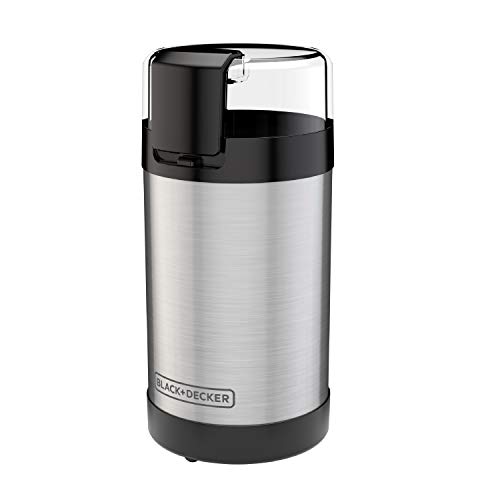
- The sharp blades and durable grinding bowl are built to last, delivering uniform grinds with every use
- GRIND YOUR FAVORITES! - Stainless steel blades quickly grind your favorite coffee beans, herbs, spices.
- ONE TOUCH PUSH-BUTTON CONTROL - Intuitive push-button control lets you easily customize the grind.
- LID-LOCKING SAFETY FEATURE - No spills, no accidents. The integrated safety mechanism allows the blades to.
Wancle Electric Coffee Grinder (Versatile and Compact)
Another excellent choice for a secondary grinder, or even as a primary if your old one has failed, is the Wancle Electric Coffee Grinder. It features a pure copper motor and stainless steel blade and bowl, which helps prevent beans from being burnt during grinding, preserving rich aroma and fresh flavor. Its compact design also helps save precious counter space.
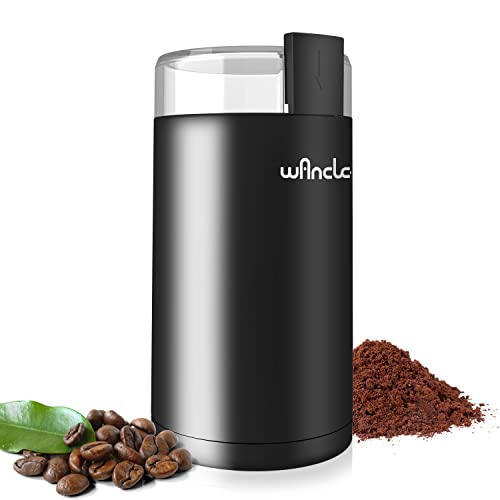
- ✅【A Secret To Grind Bean Effortlessly】Grinder comes with a pure copper motor and stainless steel blade.
- ✅【Rich Aroma & Fresh Flavor】Pure copper motor, stainless steel blade & bowl. Meaning beans won't be burnt.
- ✅【Save Your Precious Counter Space】Wancle coffee grinder offering a wide range of abilities. Excellent.
- ✅【Easy life on Wancle 】Wancle is a trusted-worth brand. We believe that Wancle coffee grinder is an.
SHARDOR Electric Coffee Grinder (Easy Cleaning Design)
The SHARDOR Electric Coffee Grinder provides a practical option for those needing a simple, effective blade grinder. With a 2.5 oz capacity, its stainless steel cup holds about 70 grams of beans per grind, powered by a 200W motor. A key benefit is the removable cup, which lifts off the base with a safety lock, making it easy to pour out grounds and clean without moving the motor itself.
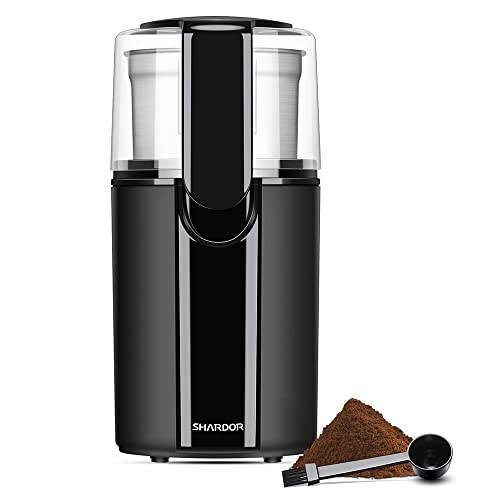
- Electric blade coffee grinder: Press the lid to grind coffee beans, spices, nuts, and seeds at home
- 2.5 oz capacity: Stainless steel cup holds about 70 g of beans per grind with a 200W motor
- Removable cup: Lifts off the base with a safety lock so grounds pour out without moving the motor
- Press-lid control: Hold the lid 5 to 20 seconds to go from coarse to fine grind
General Maintenance to Prevent Odors
Preventing weird smells in your coffee grinder largely comes down to consistent maintenance. Regular cleaning is the single most important step. Establish a routine: a quick brush-out daily, and a more thorough cleaning with grinder cleaning tablets or rice weekly or bi-weekly depending on use. This prevents oils from accumulating and turning rancid.
Always use fresh, quality coffee beans. Overly oily or dark roast beans can leave more residue faster. Store your coffee beans in an airtight container away from light and heat. This keeps the beans fresh and reduces the chance of rancidity before grinding.
Avoid overfilling the grinder. Grinding small batches reduces strain on the motor and allows for more consistent grinding. It also minimizes the amount of time fresh grounds sit in the chamber, potentially absorbing odors. Using your grinder for only coffee also greatly reduces the risk of cross-contamination.
Understanding the difference between grinder types can also help with maintenance expectations. Burr grinders, with their more complex internal mechanisms, often require more diligent cleaning than simpler blade grinders to prevent oil buildup in their many crevices.
For a deeper understanding of grinder types, consider reading our article on Burr Grinder vs Blade Grinder: Which One Makes Better Coffee?
When to Consider a New Coffee Grinder
Despite your best troubleshooting and cleaning efforts, there are times when a new coffee grinder becomes the best solution. If your grinder consistently emits a burning electrical smell, struggles to operate, or has sustained internal damage from a foreign object, its motor may be failing. The cost of repair for many home grinders often outweighs the cost of a new, entry-level model.
A grinder that produces inconsistent grinds, even after cleaning and adjustment, also signals a problem. Worn burrs or blades cannot be fixed easily and directly impact coffee quality. If your coffee consistently tastes bad due to uneven extraction, and you have ruled out other factors, your grinder may be at the end of its useful life.
Consider the age of your grinder. Like any appliance, coffee grinders have a lifespan. While well maintained burr grinders can last many years, blade grinders may have a shorter effective life due to blade dulling and motor wear. When faced with persistent smells, poor performance, or high repair estimates, exploring new options is a practical step.
Many excellent coffee grinders are available across different price points, offering improved features and grinding consistency. Upgrading can significantly enhance your daily coffee experience, ensuring fresh flavors without any unpleasant surprises.
If you are exploring replacement options, our guide on Top Coffee Grinders for French Press Under $100 offers some solid entry-level recommendations.